
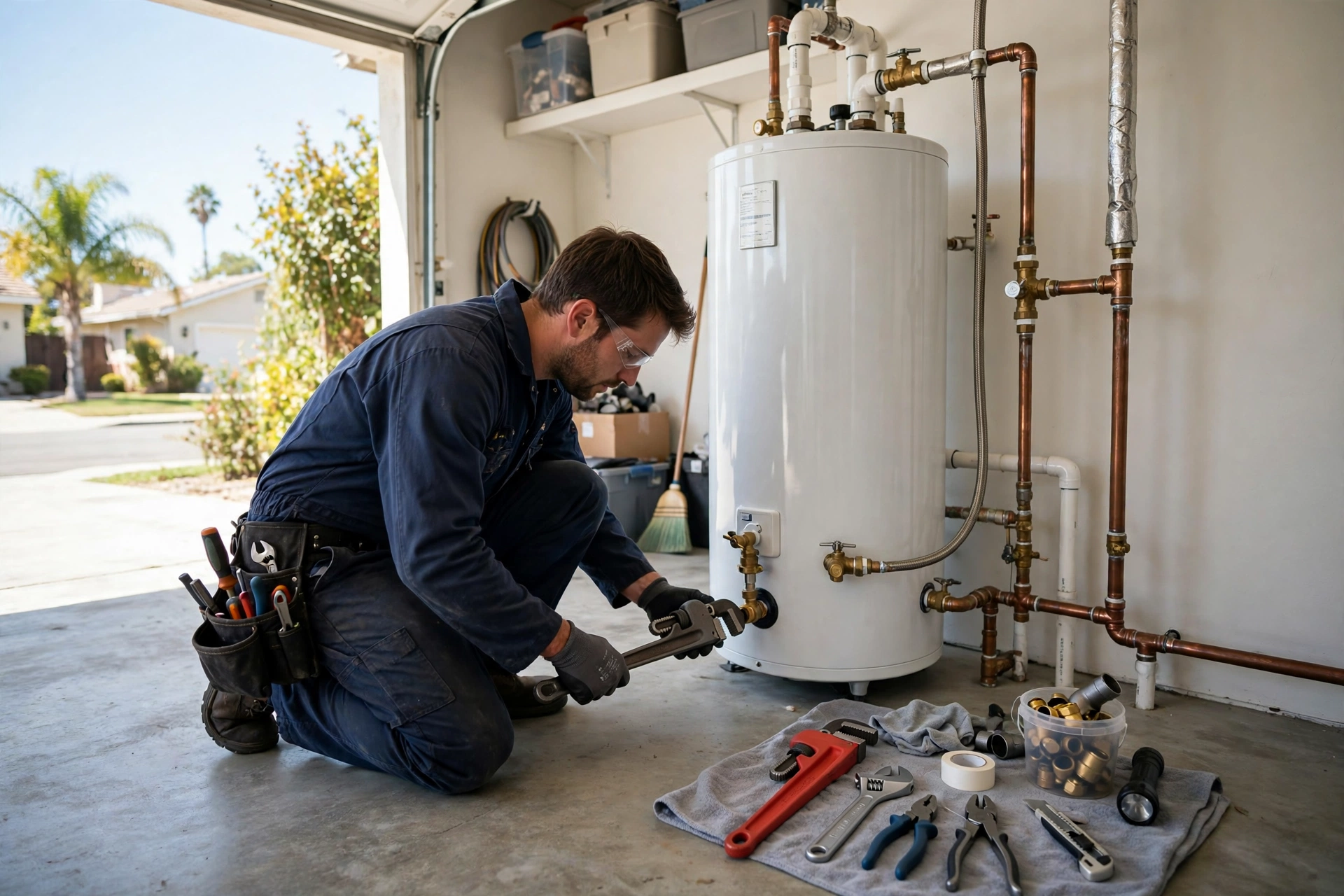
Not every drop of water on a water heater is a leak — and misdiagnosing condensation as a leak (or vice versa) costs money either way. Here’s how to tell them apart like a technician.
Why condensation happens
Cold water entering a tank in a warm, humid garage sweats — just like a cold drink on a summer day. It’s most common in the morning after heavy hot-water use refills the tank with cold water, and in humid weather. Newer high-efficiency and heat-pump units can also produce condensate as a normal byproduct.
The 5-minute differentiation test
- Dry it completely. Towel-dry the tank, all fittings, and the floor beneath.
- Wait — don’t use hot water. Give it 2–3 hours with no draw.
- Inspect. Moisture returning with zero water use points to a leak (pressure is constant). A tank that stays dry until the next big hot-water draw — then sweats — points to condensation.
- Check the pattern. Condensation forms as a fine, even film over broad tank surfaces. Leaks form at points: fittings, valves, seams — often with mineral crust or rust trails.
- Taste-test the location (visually). Water only at the tank bottom with a dry top half? Suspect the drain valve or tank base. Even film everywhere after a shower rush? Condensation.
When condensation still deserves attention
Chronic condensation keeps the tank exterior damp, which accelerates external corrosion and can drip enough to dampen the floor. If your heater sweats heavily and often, ask us about insulation blankets, ventilation improvements, or a condensate management setup — and rule out a simultaneous small leak while we’re there.
When to stop testing and call
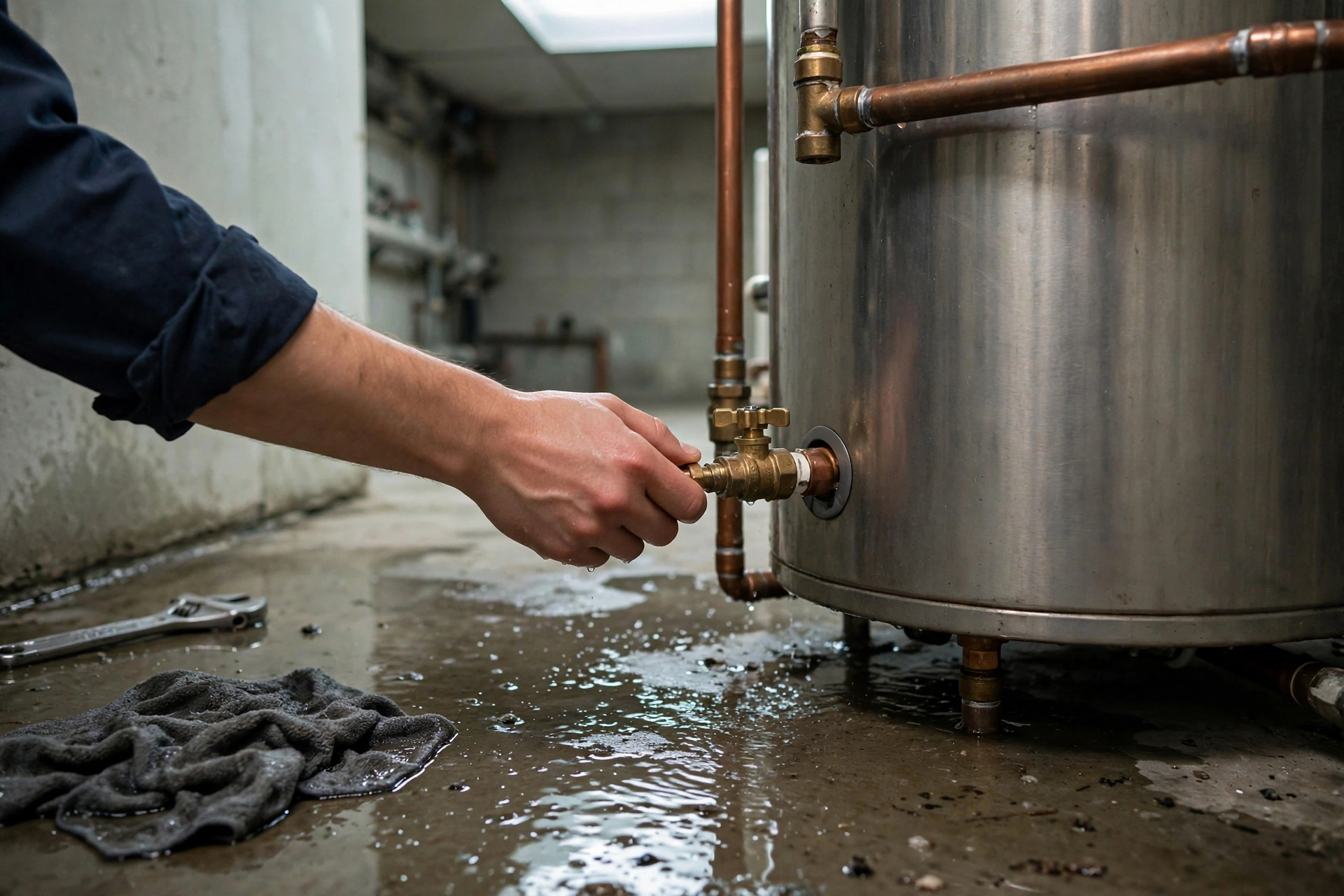
Call (833) 713-2101 if: water returns with no hot-water use, you see rust or mineral trails, the T&P discharge pipe is wet, or moisture appears on walls or the ceiling nearby. Those are leak signatures, not sweat.
Need Help With a Leak Right Now?
Don’t wait — call us now at (833) 713-2101 for same-day service in Diamond Bar and nearby communities.
Get Your Free Estimate TodayQuick Answers
Can condensation damage my floor?
Persistent heavy sweating can dampen concrete and feed surface rust on the tank. It’s slower than a leak but not harmless — worth addressing.
Do tankless units get condensation?
Condensing tankless models produce condensate by design — it should exit via the condensate drain. Water anywhere else on the unit is a leak.
Related Reading
7 Signs Your Water Heater Is Leaking (and What to Do Next) • What to Do When Your Water Heater Leaks: A Step-by-Step Safety Guide • How Long Do Water Heaters Last? Lifespan Guide for Homeowners
Related service: Emergency Water Heater Leak Repair • Tank Water Heater Leak Repair • Tankless Water Heater Leak Repair