Professional Service
Water heater leaks rarely start with a dramatic flood. Most begin quietly — a faint drip, a damp spot you notice in passing, a bill that creeps upward. The trouble is that a tank leak only gets worse, and the difference between catching it early and discovering it late can be thousands of dollars in water damage. If you live in Diamond Bar, knowing the early signs of a leaking water heater can save your flooring, your drywall, and your weekend. Here are the seven signs to watch for, what each one means, and what to do next.
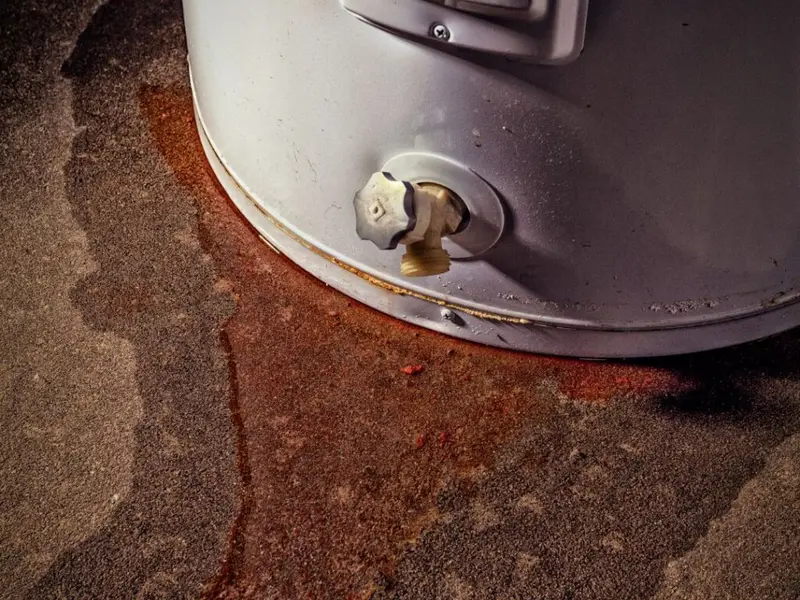
1. Puddles or Dampness Around the Base
The most obvious sign is water where it should not be. Check around the base of your tank for standing water, damp concrete, or a darkened outline on the floor. A small puddle today can be a ruptured tank next week, because tank-body leaks grow as corrosion spreads. Do not assume a wet floor is condensation — check whether it reappears after you dry it. If it does, something is leaking. Note that water on top of the tank points to a fitting or inlet leak, while water only at the base usually points to the tank itself.
2. Rust-Colored or Discolored Water
Run the hot tap. If the water comes out rusty or brownish, corrosion is happening somewhere in your system. If only the hot water is discolored, the corrosion is almost certainly inside the water heater — either the tank walls or a spent anode rod. Discolored hot water often precedes an actual leak by weeks or months, which makes it one of the most valuable early warnings you can get. Let the water run for thirty seconds; if it clears, sediment is likely. If it stays rusty, the tank is deteriorating.
3. Rust on the Tank, Fittings, or Relief Valve
Walk around your heater with a flashlight and look for orange or brown staining on the tank shell, around pipe connections, on the temperature-and-pressure relief valve, and along the bottom rim. Surface rust on a fitting can mean a slow weep at a threaded joint — annoying but repairable. Rust streaking down the tank body itself, especially from the base upward, means the steel is corroding from the inside out. By the time you see exterior rust, the interior damage is usually advanced.
4. A Sudden Rise in Your Water or Gas Bill
A small, steady leak can waste dozens of gallons a day without ever forming a visible puddle — the water evaporates, seeps into concrete, or drains away unseen. If your water bill climbs for no clear reason, a silent water heater leak is a prime suspect. On gas heaters, a higher gas bill can mean the burner is working overtime to keep a sediment-coated, inefficient tank hot. Compare bills month to month; an unexplained jump deserves investigation.
5. Reduced Hot Water or Lukewarm Showers
If showers that used to be hot now turn lukewarm halfway through, the problem might not be capacity — it might be a leak. A cracked dip tube lets incoming cold water mix with the hot supply at the top of the tank, dropping your effective hot water by a third or more. Sediment buildup has a similar effect by insulating the water from the burner or element. And in rare cases, a leak inside the tank causes the unit to refill constantly with cold water, so the burner can never catch up.
6. Hissing, Popping, or Rumbling Sounds
A quiet heater is a happy heater. Popping and rumbling usually mean sediment is boiling and shifting at the bottom of the tank. Hissing can mean water is dripping onto a hot burner or element — a sound you should never ignore. While noise alone is not proof of a leak, it signals conditions that accelerate tank damage: overheating, pressure stress, and corrosion under the sediment layer. Noisy heaters deserve a flush and an inspection, not a shrug.
7. Moisture, Mold, or Musty Smells Nearby
A slow leak in a closet, garage corner, or utility area raises the local humidity and invites mold. If you notice a musty smell near the heater, peeling paint, warped baseboards, or dark spots on nearby drywall, water has been escaping for a while. These leaks are easy to miss in Diamond Bar's warmer months, when garage floors are warm and a little moisture evaporates fast. Mold near the heater is a red flag that the leak is older than you think.
What to Do When You Spot a Leak
If you see active leaking, do three things in order: first, shut off the water supply to the heater using the cold-water inlet valve on top of the tank. Second, turn off the energy — set a gas heater to pilot or off, or flip the breaker for an electric unit. Third, if water is flowing steadily, attach a garden hose to the drain valve at the tank's base and drain the water to a safe spot. Then call for help. A fitting leak, a relief valve drip, or a corroded supply line is usually repairable. A leak from the tank body itself means the steel has failed, and the heater needs replacing — no sealant, patch, or stop-leak product will fix a rusted-through tank, and anyone telling you otherwise is selling you a delay, not a solution.
Triage: What Each Sign Means for Your Next Hour
Not every sign demands the same response. Here is how to triage:
- Active dripping or pooling water: this is the emergency. Shut the cold-water inlet valve on top of the heater (or the main house valve if you cannot identify it), kill power or gas to the unit, and call for same-day service. Every hour of active leaking is water into drywall, flooring, or the garage slab.
- Dampness or mineral crust at the tank base: urgent but not yet an emergency. The tank is weeping — likely from the shell itself, which means replacement is coming. Shutoff is not required tonight, but do not leave for a weeklong trip without addressing it. Schedule service within days.
- Water from the TPR discharge pipe: the safety valve is doing its job, which means pressure or temperature is doing something wrong. Check whether the discharge is occasional (thermal expansion — needs an expansion tank) or constant (failed valve or serious overpressure — needs prompt attention). Do not cap or plug the discharge line.
- Rust streaks down the tank: corrosion is active. The tank is not leaking yet, but the clock is running. Start getting replacement quotes now, on your schedule.
- Musty smell near the heater with no visible water: investigate — slow leaks hide behind insulation jackets, in drain pans, and under platforms. A leak detector placed at the base will catch what eyes miss.
Garage vs. Interior: Why Location Changes the Stakes
Most Diamond Bar heaters are in garages, where a leak is messy but rarely catastrophic — water spreads across concrete and out the door. That lower stake is no excuse for delay, though: garage leaks still destroy stored belongings, wick into drywall at the base of walls, and in winter can create slip hazards. And a garage leak that goes unnoticed behind storage for weeks does real damage to wall framing and baseboards.
Interior installations — closets, laundry rooms, attics — are the high-stakes version. A leak here goes directly into finished space: ceilings below, hardwood floors, cabinetry. If your heater is inside the living envelope, the triage above shifts one level more urgent across the board, and a leak detector with automatic shutoff moves from "nice to have" to "should have." Know which category your home falls in before the leak, not during it.
What NOT to Do When You Find a Leak
A few common mistakes make leaks worse. Do not try to seal a tank-body leak with epoxy, tape, or sealant — it will not hold against 50+ PSI and heated water, and it wastes the time you should spend shutting off the water. Do not cap, plug, or valve off the TPR discharge line to stop dripping — that defeats the heater's primary safety device and can turn a pressure problem into a dangerous one. Do not keep resetting a tripped breaker on an electric heater standing in water. And do not ignore a small leak because it is small: tank leaks do not stay small. The pinhole that weeps today is the split seam that floods the garage next month. Small leaks are early warnings — treat them as the gift they are and act while the response is still cheap and scheduled.
Water Heater Leak Repair Masters responds to leaking water heaters throughout Diamond Bar, CA 91765 with same-day service. If you have spotted any of these seven signs, call (833) 713-2101 now — a quick visit today beats a flooded garage tomorrow.