
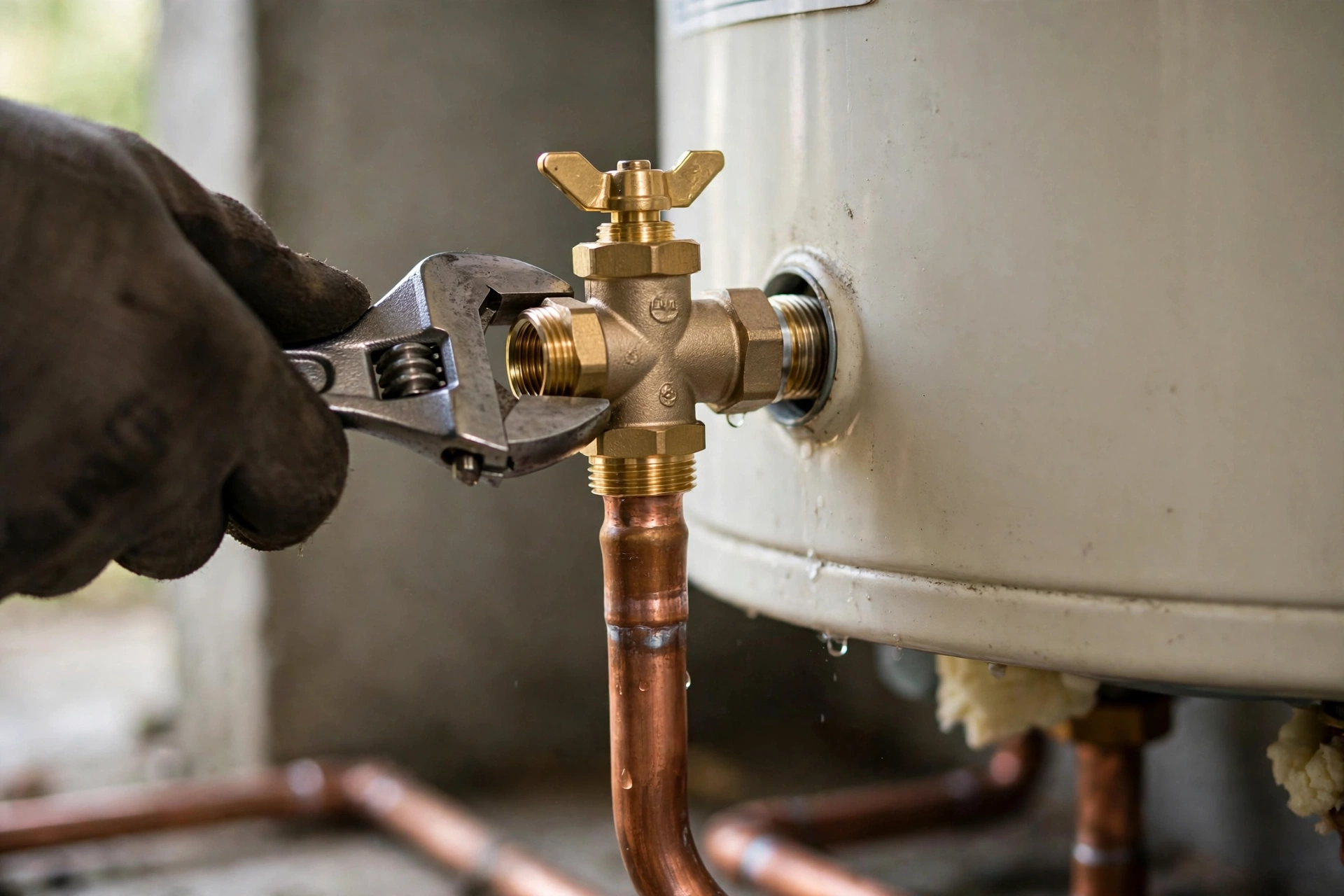
The sticker on the tank says 6 or 9 years of warranty — but actual lifespan is a different number, and knowing yours changes every repair decision you’ll make.
Realistic lifespans
- Conventional tank (gas): 8–12 years with average care; 12–15 with diligent maintenance.
- Conventional tank (electric): 10–15 years — no combustion stress, but elements and thermostats wear.
- Tankless (gas/electric): 15–20+ years, if descaled regularly. Skipped descaling in hard water can halve that.
- Heat-pump hybrid: 10–15 years, with compressor longevity the variable.
The 5 factors that shorten life
- Hard water. Our area’s mineral content is the #1 lifespan killer — scale insulates, overheats components, and eats anode rods.
- Skipped anode replacement. The rod is the tank’s bodyguard; once it’s gone, the tank’s clock runs fast.
- High water pressure. Chronic pressure above 80 PSI stresses every seal, valve, and the tank shell.
- No expansion control. Closed plumbing systems without an expansion tank hammer the heater with every heating cycle.
- Sediment neglect. Never-flushed tanks cook their lower elements and rot from the inside.
The repair-vs-replace math
Use the 50% rule as a starting point: if the repair costs more than half of replacement and the unit is past 75% of expected life, replace. A $300 valve on a 6-year-old tank? Repair, confidently. A $500 gas valve on a 12-year-old tank with seam rust? Put the money toward new.
We run this math with you on every major decision — with photos of your actual tank, not generic advice. Call (833) 713-2101 for an honest assessment.
Stretching the years you have left
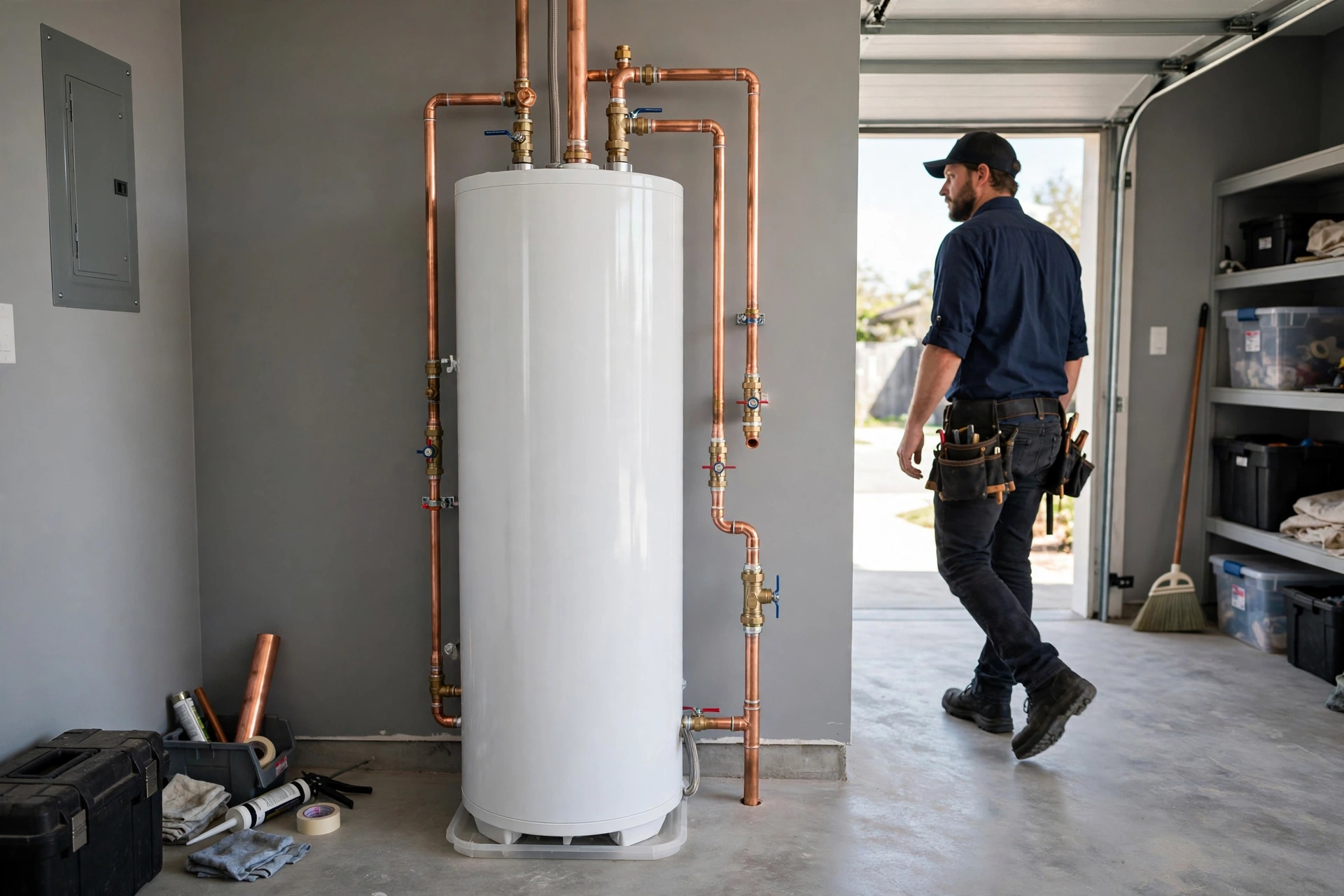
Annual flush, anode check every 3–5 years, pressure kept at 50–60 PSI, and a working expansion tank — that quartet routinely adds 3–5 years to a tank’s life. Our maintenance checklist walks you through it.
Need Help With a Leak Right Now?
Don’t wait — call us now at (833) 713-2101 for same-day service in Diamond Bar and nearby communities.
Get Your Free Estimate TodayQuick Answers
My heater is 14 and working. Replace now?
Not necessarily — but get an honest inspection. If the anode’s dead and the tank’s rusting, a planned replacement beats a 2am flood.
Does a longer warranty mean a longer-lasting tank?
Mostly it means a thicker anode rod from the factory — which helps, but maintenance still decides the outcome.
Related Reading
7 Signs Your Water Heater Is Leaking (and What to Do Next) • What to Do When Your Water Heater Leaks: A Step-by-Step Safety Guide • Water Heater Leak vs. Condensation: How to Tell the Difference
Related service: Emergency Water Heater Leak Repair • Tank Water Heater Leak Repair • Tankless Water Heater Leak Repair