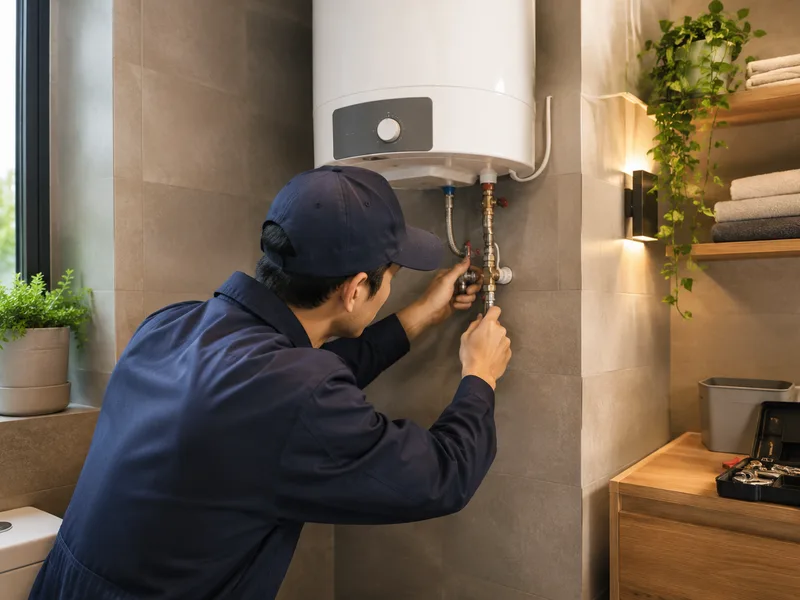
Professional Service
A water heater is one of the few appliances that punishes neglect and rewards attention in direct proportion. Skip maintenance for a decade and you will likely replace the unit years early — possibly after it floods your garage. Spend an hour or two a year on basic care and that same heater can sail past its expected lifespan. This checklist covers everything a Diamond Bar homeowner should do annually, what to check every few years, and the warning signs that mean maintenance has turned into repair.
Monthly: The 60-Second Look-Over
You do not need to do much monthly, but a quick visual check catches problems while they are small. Walk past the heater and look at the floor around the base — any new dampness, staining, or mineral crusts? Glance at the top fittings and the relief valve discharge pipe for drips. Listen for new sounds: popping, rumbling, or hissing that was not there last month. This takes less than a minute and builds the habit of noticing. Most catastrophic water heater failures announce themselves weeks in advance to anyone who is looking.
Annually: The Core Maintenance Visit
Once a year, give your heater a proper servicing. These are the tasks that matter most:
- Flush the tank to remove sediment. Drain several gallons — or the full tank — until the water runs clear. In Diamond Bar's moderately hard water, annual flushing prevents the sediment buildup that causes popping noises, wasted energy, and overheated tank bottoms.
- Test the temperature-and-pressure relief valve. Lift the lever briefly and let it snap shut. Water should flow freely and stop completely when released. A valve that drips afterward or will not open needs replacing.
- Check the thermostat setting. Confirm it is at 120°F. Higher settings waste energy, accelerate mineral buildup, and create scalding risk.
- Inspect the anode rod. This does not need doing every single year, but check it at year three and annually after that. A consumed rod means unprotected tank walls.
- Look over all connections. Check inlet, outlet, and gas or electrical connections for corrosion, dampness, or mineral deposits. Tighten or replace weeping fittings before they become leaks.
- Check the vent on gas heaters. Make sure the flue is properly seated, free of obstructions, and drafting correctly. Look for rust or soot staining that signals venting problems.
- Verify earthquake straps. California requires water heaters to be strapped. Confirm both straps are snug and the mounting hardware is solid — straps loosen over years of vibration.
- Clear the area around the heater. Maintain clearances per the manufacturer's label. Stored boxes, paint cans, and chemicals near a gas heater are a fire hazard.
Every 3 to 5 Years: The Deeper Tasks
Some maintenance runs on a longer cycle. Replace the anode rod when inspection shows it is consumed — typically every three to five years, sooner with a water softener. Consider replacing the TPR valve proactively around the ten-year mark, since its spring and seat degrade silently. On gas heaters, have the burner assembly cleaned and inspected; dust and lint accumulation affects combustion quality. Check the expansion tank's air charge if you have one — they lose pressure over time, and a waterlogged expansion tank protects nothing. And if your drain valve is the cheap factory plastic type, consider upgrading to a full-port brass valve during a flush; it drains faster and will not snap off in your hand.
Seasonal Considerations for Diamond Bar
Southern California's mild climate means water heaters face less freeze risk than in colder regions, but local conditions still matter. Summer heat in garages can push ambient temperatures high, making the heater work slightly less but accelerating corrosion chemistry. If you leave town for an extended trip, turn a gas heater to pilot or vacation mode and consider shutting the water supply — a leak that runs for two weeks while you are away does far more damage than one you catch the same day. After any earthquake, even a minor one, check the heater for shifted position, stressed connections, and water at the base; seismic movement is a leading cause of sudden water heater leaks in California.
Signs Maintenance Is Overdue
If you recognize your heater in this list, it is past time for attention: popping or rumbling during heating, rusty or discolored hot water, a relief valve that drips, water pooling at the base, a pilot that keeps going out, or hot water that runs out faster than it used to. None of these fix themselves. The good news is that catching them now still leaves room for maintenance to help; catching them after the tank ruptures leaves room for nothing but replacement and repairs to your flooring.
Monthly: The 60-Second Walk-By
Once a month, when you are in the garage anyway, spend one minute at the water heater. Look at the floor around the base — dry? Look at the tank — any new rust streaks, any dampness at fittings? Glance at the TPR discharge pipe termination — dry? Check that the area around a gas unit is clear of stored items blocking combustion air. That is the whole monthly routine. You are not servicing anything; you are establishing a baseline so that change — the thing that actually signals trouble — gets noticed early. Most catastrophic tank failures announce themselves weeks in advance to anyone who looks.
Twice a Year: The Real Maintenance Session
Spring and fall are the natural anchors in Diamond Bar — mild weather, and the clock-change weekends make memorable triggers. Each session covers:
- Flush sediment. Drain several gallons (or a full flush annually) until the water runs clear. Exercise the drain valve so it does not seize.
- Test the TPR valve. Lift the lever briefly, confirm flow and reseating. Replace if it drips afterward or will not open.
- Check the anode rod. Full removal inspection every 2–3 years; in between, just note the fitting's condition and any odor changes in hot water.
- Inspect venting (gas). Look at the vent connector for rust, gaps, or back-pitch. Check that the draft hood is seated.
- Verify seismic straps. Tug-test firmness, check for rust on hardware, confirm two straps at upper and lower thirds.
- Check pressure. A gauge on the drain valve or hose bib: 50–70 PSI is the target. Above 80 needs a PRV; spikes after heating need an expansion tank check.
- Test leak detectors. Wet the sensor contacts briefly to confirm the alarm sounds, then dry it.
The whole session takes under an hour once you have done it twice. Bundle it with changing smoke detector batteries or servicing the HVAC filter — maintenance that shares a trigger gets done.
Every Few Years: The Bigger Items
On a two-to-five-year cycle, handle the items that do not need frequent attention but punish neglect. Replace the anode rod when inspection shows it spent (typically years 3–5 in Diamond Bar water, sooner with a softener). Replace the TPR valve proactively around year 7–8 rather than waiting for it to fail. Have the gas control valve and burner assembly professionally cleaned and inspected if you notice sooting, yellow flame tips, or delayed ignition. Check the expansion tank's air charge every couple of years — it bleeds down slowly, and a tank at the wrong charge protects nothing.
This is also the cycle for reassessing the big picture: at year 8–10, start the replacement conversation — quotes, tank vs. tankless vs. heat pump, incentives. At year 5, review your homeowner's insurance to confirm water damage coverage terms while nothing is wrong. Maintenance is not just wrenches; it is planning.
Seasonal Notes for Diamond Bar's Climate
Diamond Bar's Mediterranean climate makes the calendar forgiving, but two seasonal notes apply. Before summer, remember that garage temperatures soar — verify that stored items have not migrated against the heater's clearances and combustion air openings during spring cleaning rearrangements. The summer heat also means cold-water inlet temperatures rise, slightly reducing condensation issues but increasing standby losses on poorly insulated piping.
Before the rainy season (late fall), check the garage for drainage: a water heater leak during a winter storm, when the ground is saturated and everything is damp anyway, goes unnoticed longer. Confirm the drain pan drains, the leak detector works, and the TPR discharge terminates where you can see it. Winter is also when out-of-town travel peaks — if the house will sit empty for weeks, consider shutting the water heater's cold inlet (leaving the unit itself on or in vacation mode per the manufacturer) so a leak cannot run unattended. These small seasonal habits, layered onto the monthly glance and the twice-yearly session, are what a well-maintained Diamond Bar water heater looks like from the outside: unremarkable, reliable, and boring in the best way.
Want the maintenance done right without the hassle? Water Heater Leak Repair Masters offers thorough water heater tune-ups across Diamond Bar, CA — flushing, valve testing, anode inspection, and a full condition report. Call (833) 713-2101 to schedule yours.