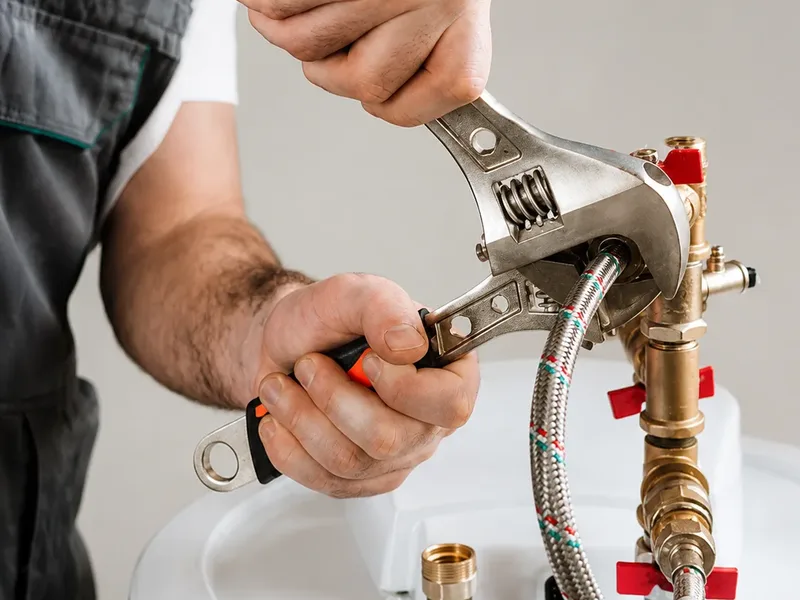
Professional Service
"How much will this cost?" is the first question every homeowner asks when the water heater fails — and the internet answers with a range so wide it is useless. National averages blur together simple swaps and complex conversions, cheap units and premium ones. Here are realistic 2026 cost ranges for the Los Angeles area, what drives the price up or down, and how to avoid overpaying without buying trouble.
Typical 2026 Replacement Cost Ranges
These are installed-price ranges — unit, labor, basic materials, and permit — for the Diamond Bar area in 2026. Prices vary by contractor, brand, and site conditions, but these brackets reflect the current market:
- Conventional gas tank (40–50 gal), like-for-like swap: roughly $1,400–$2,400 installed. The most common job; a straightforward replacement of an accessible garage unit lands near the middle.
- Conventional electric tank (40–50 gal), like-for-like: roughly $1,200–$2,200 installed. Slightly simpler than gas (no venting), though electrical work can add cost.
- Tankless gas unit (retrofit): roughly $3,500–$6,500 installed. The wide range reflects gas line upgrades, new venting, and condensate handling that many retrofits need.
- Heat-pump (hybrid) water heater: roughly $2,500–$4,500 installed. Higher equipment cost, but potential utility rebates can offset it — check current programs.
- Fuel-type conversion (gas to electric or reverse): add $800–$2,500+ to the base job for new circuits, gas lines, venting, or panel work.
Emergency or after-hours replacement typically adds a premium. A planned replacement scheduled during normal hours is always the cheapest path — another reason to replace an aging heater on your schedule rather than at 2 a.m.
What Drives the Price Up
Several factors push a job above the middle of the range. Difficult access — tight closets, attic installations, or units that need to be carried through finished living space — adds labor. Code upgrades on older installations add real cost: earthquake strapping, expansion tanks, drain pans, bollards, and bringing venting up to current standards are all legitimate line items. Permit fees in Los Angeles County run a few hundred dollars and are non-optional for a legal install. High-efficiency or premium units (longer warranties, powered dampers, smart controls) cost more upfront. And any job that uncovers problems — corroded shutoff valves that need replacing, a gas line that needs upsizing, water damage that needs remediation — grows accordingly. A reputable quote itemizes these rather than burying them.
What Keeps the Price Down (Without Cutting Corners)
The legitimate savings are in planning, not in shaving quality. Replacing like-for-like avoids conversion costs. Scheduling during normal hours avoids emergency premiums. Choosing the mid-tier unit with a solid warranty rather than the flagship with features you will never use saves hundreds. Getting two or three itemized quotes keeps everyone honest — but compare itemization, not just the bottom line, because the cheapest bid often omits the permit, the expansion tank, or the haul-away. And maintaining your current heater to delay replacement is the ultimate savings: every extra year you get from a flush and an anode rod is a year of deferred capital cost.
Rebates, Tax Credits, and Financing in 2026
Before you pay full price, check what is available to bring the cost down. Heat-pump water heaters often qualify for utility rebates through Southern California programs, and federal tax credits for high-efficiency water heating have applied in recent years — check current IRS guidance for 2026 eligibility, since these programs change. Some utilities also offer rebates for recycling your old unit. Many contractors offer financing, which can make sense for an emergency replacement you did not budget for — just compare the total financed cost, not only the monthly payment. A few hundred dollars in rebates plus the energy savings of an efficient unit can meaningfully change the math, especially on heat-pump models where incentives are richest.
Red Flags in Water Heater Quotes
Watch for quotes that seem too good to be true — they usually are. Common red flags: no permit included (unpermitted work voids warranties and creates resale problems), no mention of expansion tank or seismic straps on a California install, a price quoted without seeing the site (every installation has quirks), pressure to decide "today only," and a bid dramatically lower than the others, which means something is being skipped. Also be wary of upsells you do not need: a basic household does not need the top-of-the-line smart heater with Wi-Fi diagnostics, and a 12-year warranty tier is not automatically worth double the price of the 6-year unit.
The Real Cost of Waiting
Delaying a needed replacement has its own price tag. An aging, inefficient heater costs more to run every month. A tank that fails catastrophically can cause thousands in water damage — flooring, drywall, mold remediation — dwarfing the replacement cost. And emergency replacements, done under time pressure with water on the floor, always cost more than planned ones and leave no room to shop quotes. If your heater is past its expected lifespan and showing symptoms, the cheapest replacement is the one you schedule yourself.
Want a straight, itemized quote for water heater replacement in Diamond Bar? Water Heater Leak Repair Masters provides clear pricing with every code-required item listed — no mystery line items, no pressure. Call (833) 713-2101.