Professional Service
If your electric water heater has suddenly gone cold — or your showers have shrunk from luxurious to lukewarm — there is a good chance one of its heating elements has burned out. Electric tank water heaters heat water with two immersion elements, one upper and one lower, and when either fails, the heater cannot do its job. In Diamond Bar, where mineral-rich water coats everything it touches, heating elements live especially hard lives: scale builds up on the element sheath like insulation, forcing the element to run hotter and hotter until it finally burns through. Heating element replacement is a straightforward, affordable repair that restores your heater to full capacity, usually in a single visit. Our team diagnoses electric water heaters across Diamond Bar, CA 91765 with proper electrical testing — never guesswork — and replaces failed elements with the correct wattage and voltage for your model. Call (833) 713-2101 to get your hot water back today.
How Heating Elements Work and Why They Burn Out
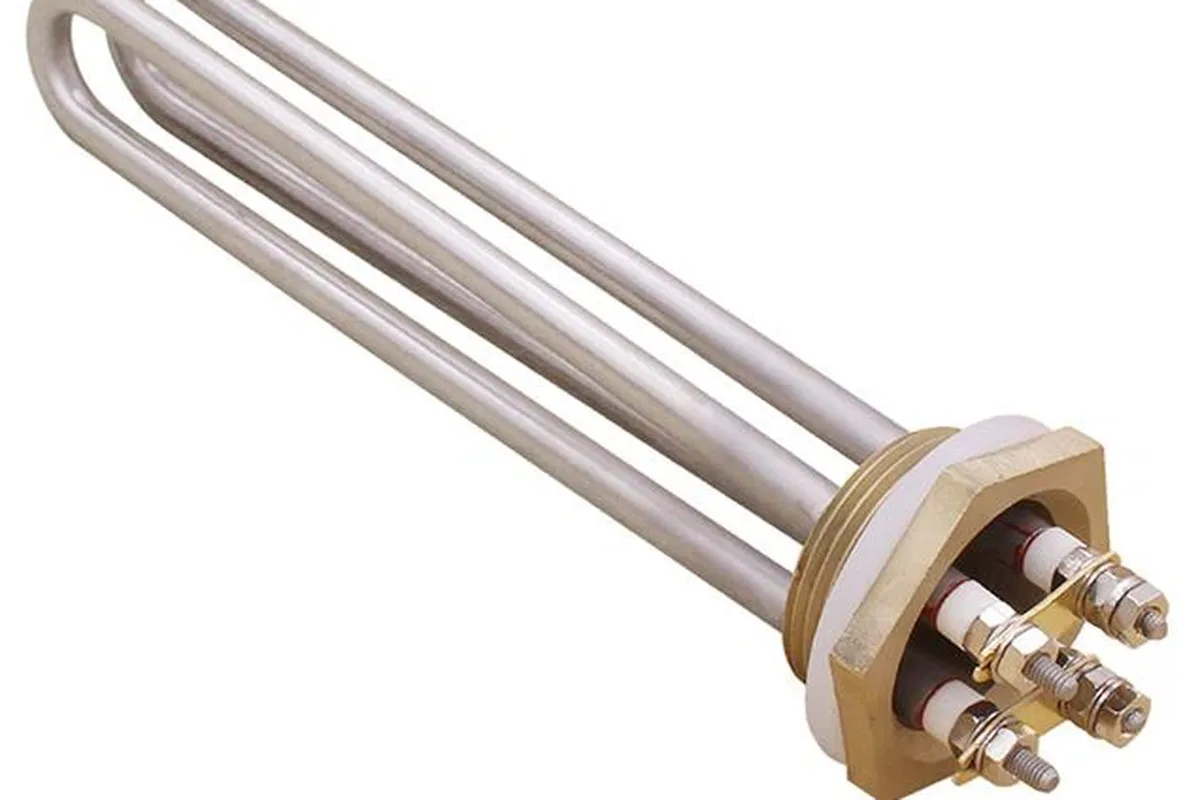
A heating element is essentially a high-powered immersion coil: an electrical resistance element sealed inside a metal sheath, threaded through the tank wall so it sits directly in the water. When current flows, the element glows hot and transfers that heat to the surrounding water. Most residential electric heaters use two of them. The upper element handles recovery — reheating the top of the tank after hot water is drawn — while the lower element does the bulk heating of the full tank. They never run simultaneously; the thermostats sequence them so only one draws power at a time. It is a simple, robust design, and the element itself is the wear item in the system.
Elements die for a handful of well-understood reasons, and in Diamond Bar, scale leads the list. Dissolved minerals precipitate out of heated water and crust onto the element sheath, forming an insulating layer. The element must then run hotter to push the same heat through that crust, and the hotter it runs, the faster the internal resistance wire degrades — until the wire burns through or the sheath breaches. This is why an element in a never-flushed Diamond Bar tank can fail in a few years while the same element in soft-water territory lasts a decade. Sediment contributes too: a deep sediment bed can bury the lower element, overheating it in exactly the same way.
The other classic killer is dry-firing — powering an element that is not submerged in water. This happens when a tank is drained for service and the power is restored before the tank is completely refilled, or when a leak drops the water level below an element. An unsubmerged element overheats in seconds and destroys itself, sometimes spectacularly. Age finishes the job for the rest: years of thermal cycling eventually crack sheaths and break down internal insulation. The pattern is consistent enough that when we arrive at a cold electric heater in Diamond Bar, the elements and thermostats are the first suspects — and proper testing tells us which one, or whether scale and sediment are the deeper story behind the failure.
Telltale Signs of a Failed Element
Element failures announce themselves through your hot water, and the specific symptom often reveals which element died. No hot water at all — stone cold from every tap — usually means the upper element or its thermostat has failed, since the upper element handles initial recovery and the heater cannot get started without it. Lukewarm water that never gets truly hot points the same direction: the upper element is weak or dead, and the lower element alone cannot finish the job. The most common complaint, though, is hot water that runs out far too fast. That is the classic lower-element failure: the top of the tank heats normally, so the first few minutes of the shower feel fine, but with no lower element reheating the bulk of the tank, the hot supply collapses quickly.
Telltale signs of a failed heating element
- No hot water at all from any tap
- Water gets lukewarm but never truly hot
- Hot water runs out much faster than it used to
- The reset button on the upper thermostat keeps tripping
- The circuit breaker for the heater trips repeatedly
- Sizzling, hissing, or popping sounds from inside the tank
Electrical symptoms tell their own story. A reset button (the high-limit switch on the upper thermostat) that keeps tripping suggests an element is overheating the tank — often a lower element buried in sediment or a thermostat stuck closed. A breaker that trips points to an element whose sheath has breached, letting current leak into the water itself. Sizzling or hissing from the tank can mean water is flashing to steam on a scaled, overheated element. Any of these symptoms warrants prompt attention: a failed element is a cheap fix, but running a heater with a shorted element or a stuck thermostat risks damage to the wiring, the thermostats, and in extreme cases the tank. When Diamond Bar homeowners call us for water heater leak repair and mention the hot water has been acting strangely too, we check the electrical system as part of the visit — the two problems often share a root cause in neglected maintenance.
Diagnosis Before Replacement: Testing, Not Guessing
The most expensive mistake in electric water heater repair is replacing the wrong part. Elements and thermostats fail with overlapping symptoms — a dead upper thermostat looks exactly like a dead upper element from the shower — and guessing means paying for a part you did not need while the real fault remains. That is why our diagnosis starts with a multimeter, not a parts catalog. With the power verified off, we test each element for continuity and for shorts to ground: a good element shows the resistance its wattage rating predicts, while a failed one shows infinite resistance (burned-through wire) or continuity to the sheath (breached insulation leaking current into the water).
The thermostats get tested too, because a thermostat stuck open will never power its element no matter how healthy that element is, and a thermostat stuck closed will overheat the tank and trip the high-limit. We check that each thermostat calls for heat at the right temperature and cuts out crisply, and we inspect the wiring for heat damage — a failing element often scorches its wire connections before it dies completely. Sediment gets assessed as well: if the lower element is buried in six inches of mineral grit, replacing the element without flushing the tank just schedules the next failure. Diagnosis takes minutes with the right meter and the knowledge to interpret it, and it is the difference between a repair that lasts and a repair that gets repeated.
This disciplined approach is especially important in Diamond Bar, where scale-driven failures are the norm rather than the exception. A homeowner who replaces an element themselves without testing may fix the symptom for a season, only to have the new element burn out on the same scale that killed the old one. Our service identifies the failed component and the conditions that failed it, so the repair addresses both. You get a clear explanation — which element, what the meter showed, what the tank looked like inside — and a fix sized to the actual problem, not a guess.
Our Element Replacement Service
Once testing has identified the failed element, replacement follows a careful sequence built around one non-negotiable rule: the tank must be completely full of water before power is restored, or the new element will dry-fire and destroy itself in seconds. We start by switching off the heater's dedicated breaker and verifying zero voltage at the elements with a meter — not trusting the breaker label alone. The cold-water inlet closes, a hot tap opens to relieve pressure, and the tank drains below the failed element's port. The access panel and insulation come off, wires are disconnected and labeled, and the old element is unthreaded and inspected — its condition often confirms the diagnosis, with heavy scaling or a visibly breached sheath telling the story.
The new element must match the original specification exactly: same voltage, same wattage, same thread and length for the tank. We clean the port threads, install the new element with its gasket seated properly, and torque it to seal without cracking the gasket. Wires are reconnected to the correct terminals — upper and lower elements wire differently through the thermostat sequence — and the insulation and access panels go back on. Then the tank refills completely, air purges from the hot taps until water runs solid, and only then does the breaker go back on. That order — fill first, power last — is the step impatient DIY attempts most often get wrong, and it is the most expensive step to get wrong.
With power restored, we verify the repair the way it should be verified: watching the heater through a heating cycle, confirming the correct element draws current at the right time in the sequence, and checking that delivered water temperature matches the thermostat setting. The tank gets a quick leak inspection at the element ports and surrounding fittings while we are there, since the tank is already drained and accessible. Most heating element replacements in Diamond Bar finish within a single visit, and you will feel the difference in the very next shower. To schedule yours, call (833) 713-2101.