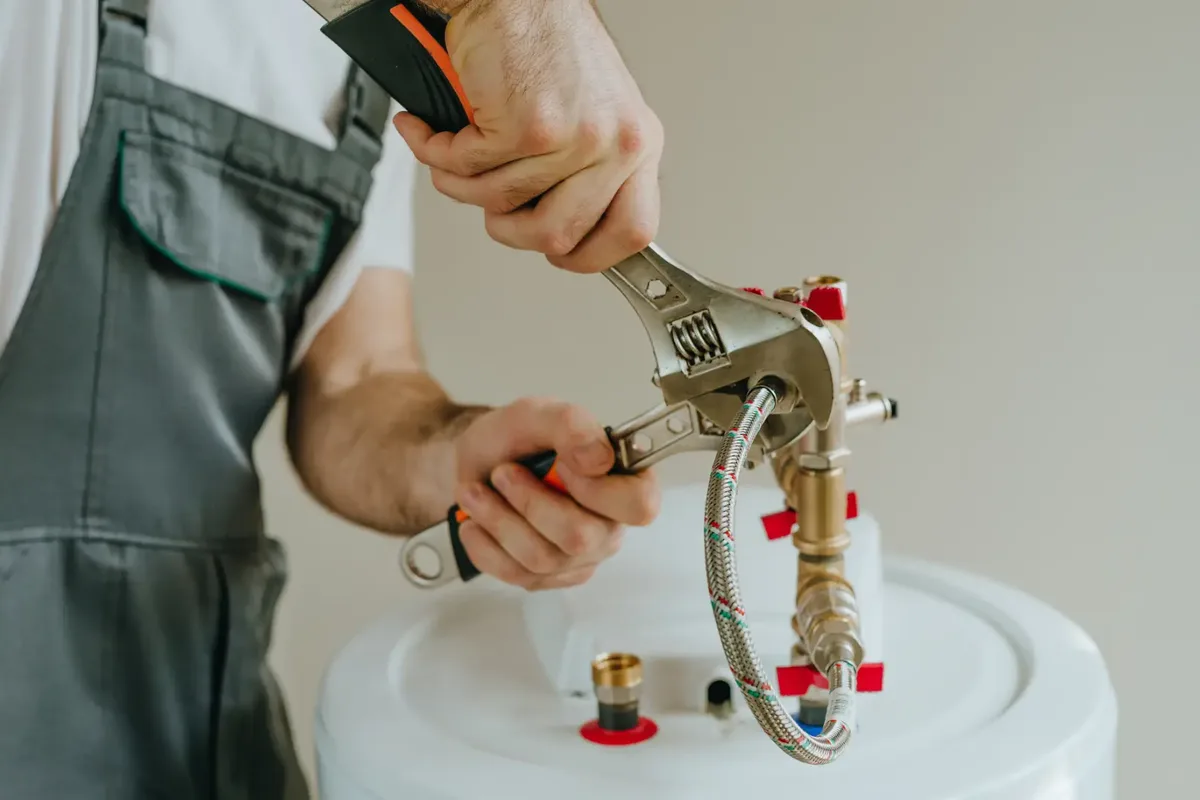
Professional Service
Finding water under your tank water heater triggers an immediate fear: the tank has failed and you are facing a full replacement. Sometimes that fear is justified — but often it is not. A large share of the puddles we investigate across Diamond Bar turn out to come from repairable sources: a weeping fitting, a tired drain valve, a dripping TPR valve, or a loose connection — while the tank itself remains perfectly sound. The difference between a modest repair and an unnecessary replacement comes down to accurate diagnosis, and that is exactly what our tank water heater leak repair service delivers. We trace every leak to its true source using systematic inspection, fix what can be fixed, and tell you plainly when replacement is the honest answer. Serving Diamond Bar, CA 91765 with same-day service on gas and electric tank heaters of every major brand. Call (833) 713-2101 and let us find out what your leak really is.
Where Tank Water Heaters Actually Leak
When water appears around a tank water heater, it can originate from a surprising number of places, and most of them are not the tank. Start at the top: the cold-water inlet and hot-water outlet connections, where dielectric unions or nipples meet the tank, are common seep points as gaskets age and threads loosen through years of thermal cycling. The temperature-pressure relief (TPR) valve, also mounted near the top, drips when it is worn — or when household pressure is excessive, which is a system problem rather than a valve problem. The anode rod port can weep if its seal has deteriorated. Any of these produce water that runs down the tank jacket and pools at the base, looking for all the world like a tank failure while the steel is fine.
Around the sides and bottom, the suspects multiply. The drain valve at the tank base is a notorious dripper, especially the original plastic valves after years of Diamond Bar's mineral-heavy water. On electric heaters, the heating element gaskets can seep, and the thermostat access panels may show dampness that traces back to a port seal. The gas control valve's temperature probe port on gas models is another potential seep point. Condensation deserves mention too: a cold tank in a humid garage can sweat enough to leave a damp ring that mimics a leak, particularly on the cold inlet pipe and the flue — we verify suspected leaks rather than assuming, because condemning a heater over condensation is an expensive mistake.
Then there are the leaks that truly are the tank: pinholes through the steel wall, weeping seams, and rust-through at the base. These have a distinctive character — water appearing from under the jacket with no fitting above it, rust streaks running down the tank body, or a damp tank base with dry fittings all around. Tank-body leaks are terminal; the steel cannot be patched in any way that lasts or is safe. Our water heater leak detection process in Diamond Bar is built to distinguish these cases systematically, top to bottom, so the diagnosis you get reflects the actual source — not the scariest possibility, and not the cheapest guess.
Leaks We Can Repair vs. Leaks That Mean Replacement
The single most important distinction in tank water heater leak repair is between leaks we can fix and leaks that mean the heater's life is over. In the repairable column: drain valves, TPR valves, inlet and outlet connections, anode rod port seals, heating element gaskets, gas control valve fittings, and condensate or piping leaks adjacent to the heater. These are component failures — the parts around the tank wearing out while the tank itself remains sound. Each has a defined repair: replace the valve, reseat the connection, install a new gasket. Done properly, these repairs return the heater to reliable service for years, at a fraction of replacement cost.
In the replacement column: any breach of the steel tank wall itself. Pinhole leaks, weeping longitudinal seams, rust-through at the base, and leaks from under the jacket with no fitting source all mean the corrosion battle inside the tank has been lost. No sealant, epoxy, or patch survives the combination of pressure, heat cycling, and ongoing corrosion inside a failed tank — and attempting to patch a pressure vessel is unsafe regardless. When we find a tank-body leak, we say so directly and pivot to replacement options, including same-day installation. There is no upsell in that recommendation; it is simply the only repair that actually holds.
Between those clear cases lies a judgment zone we navigate honestly: an aging tank with a repairable fitting leak, for example. Technically fixable — but if the heater is thirteen years old with visible rust, putting money into fittings may buy only months before the tank itself lets go. In those cases we lay out both paths with real numbers: the repair cost and its likely horizon versus replacement cost and a fresh start. Our job is not to maximize today's invoice; it is to give you the information to make the call you would make if you could see inside the tank. Diamond Bar homeowners trust our tank water heater leak repair service because that honesty runs both directions — we fix what should be fixed, and we say so when it should not be.
Our Leak Repair Process, Start to Finish
Every tank water heater leak repair visit starts the same way: with the water still running, so we can watch the leak behave. A leak's character — steady drip versus pressure-dependent seep, hot versus cold water, continuous versus intermittent — narrows the suspect list before a wrench comes out. We inspect from the top down: inlet and outlet connections, TPR valve and its discharge pipe, anode port, then down the jacket for rust streaks, then the drain valve, element ports, and tank base. Moisture meters and careful touch-testing distinguish active seeps from old stains, and we check whether the water is hot (tank-source) or cold (supply-side or condensation). This systematic pass takes minutes and prevents the most common diagnostic error: fixing the first drip found while the real source continues untouched.
Once the source is identified, we stabilize first and repair second. The water and energy supplies shut off, pressure relieves, and the tank drains only as far as the repair requires — a valve swap needs a partial drain, while element gaskets need the level below their ports. The failed component comes out, the mating surfaces are cleaned and inspected (a corroded tank thread changes the plan), and the new part goes in with proper sealant and torque. We favor durable upgrades where they make sense: brass ball drain valves instead of plastic, quality TPR valves with correct ratings, new dielectric unions where dissimilar metals have been corroding each other.
The repair is not done when the part is in — it is done when it is proven. We refill, restore energy, bring the heater through a full heating cycle, and watch every repaired joint under operating pressure and temperature. The surrounding fittings get rechecked too, because disturbing one connection can reveal weakness in its neighbor. Before leaving, we give you the full picture: what leaked, why it leaked, what we fixed, and what else we noticed — anode rod condition, sediment level, pressure readings — so you can plan ahead instead of reacting. That complete loop, from detection through verified repair, is what professional tank water heater leak repair looks like in Diamond Bar. Call (833) 713-2101 to start it.
Why Diamond Bar Tanks Leak When They Do
Water heaters in Diamond Bar fail in patterns shaped by local conditions, and understanding those patterns explains why leaks cluster the way they do. Water chemistry leads the list: the dissolved minerals in local water accelerate both scale formation and galvanic corrosion, which is why anode rods deplete faster here and why sediment-related failures — overheated elements, stressed tank bottoms — are so common. A heater that has never been flushed in Diamond Bar is not a maintained heater; it is a heater accumulating the conditions for its own failure. The sediment connection to leaks is direct: scale insulates the tank bottom, creates localized overheating, stresses the steel, and shortens the tank's life from the inside out.
Water pressure is the second local factor, and the more overlooked one. Many Diamond Bar homes sit behind pressure-reducing valves that create closed plumbing systems, where thermal expansion has nowhere to go as the heater fires. Without a functioning expansion tank to absorb that pressure spike, every heating cycle hammers the tank seams, the TPR valve, and every fitting — dripping TPR valves and weeping connections are often pressure symptoms, not valve defects. We check static pressure and expansion control on every leak call, because replacing a TPR valve without addressing the pressure that killed it guarantees a repeat visit.
Age and neglect complete the picture. The average tank heater gives ten to twelve years; past that, steel fatigue and cumulative corrosion make leaks a matter of when, not if. And neglect multiplies every other factor — the unflushed tank scales faster, the unchecked anode rod depletes unnoticed, the untested TPR valve seizes. The encouraging flip side is that each of these has a countermeasure: annual flushing, periodic anode rod service, pressure verification, and timely component replacement. Our maintenance visits bundle all of them, and they cost a fraction of even one emergency repair. Prevention is not just cheaper than water heater leak repair in Diamond Bar — it is the reason many of our maintenance customers never need the repair side of our business at all.