Professional Service
At the very bottom of your tank water heater sits a small, overlooked fitting that does one of the most important maintenance jobs in your home: the drain valve. Every time sediment gets flushed from a tank, it exits through this valve — and in Diamond Bar, where mineral-heavy water lays down sediment fast, that valve works harder than almost anywhere else. The problem is that most heaters ship with a cheap plastic drain valve that was never designed for a decade of heat cycling and gritty water. The plastic cracks, the seal wears, and one day you notice a slow drip that never stops, or a valve that will not close at all after a flush. Drain valve replacement swaps that failure-prone plastic for a durable brass ball valve that seals positively, drains faster, and makes every future flush easier. Our team replaces drain valves across Diamond Bar, CA 91765, pairing the swap with a full sediment flush so your heater gets a fresh start. Call (833) 713-2101 to book your service.
What the Drain Valve Does and Why It Fails
The drain valve is a simple hose-bib style fitting threaded into the bottom of the tank, and its job is exactly what the name says: drain the tank for flushing, maintenance, and service. A garden hose threads onto it, the valve opens, and water — along with the sand-like sediment that settles at the tank bottom — flows out. That sounds straightforward, but the valve lives in the harshest spot on the entire heater. It sits in the hottest, most sediment-packed zone of the tank, submerged in mineral grit, expanding and contracting with every heating cycle, year after year. The original-equipment plastic valves most manufacturers install are adequate on day one and increasingly marginal every year after.
Failure usually follows one of a few familiar paths. The plastic body develops hairline cracks from thermal stress, and water begins weeping through the crack itself — no amount of tightening fixes that. More commonly, the internal washer or seal hardens and takes a permanent set, so the valve drips constantly or refuses to seal after being opened for a flush. Sediment makes everything worse: grit lodges in the seal, scores the sealing surfaces, and turns a valve that sealed fine last year into one that drips today. Cross-threading is the other classic killer — a hose forced on at an angle damages the plastic threads, and from then on the connection seeps. In Diamond Bar, where annual flushing is genuinely necessary rather than optional, these valves simply get more cycles than the national average, which is why we see so many of them fail here.
A dripping drain valve is easy to dismiss because the drip is small, but it matters for two reasons. First, it wastes water continuously and keeps the area under your heater damp, which can hide the early signs of a far more serious tank leak developing nearby. Second, a valve that will not seal is a valve you cannot trust during the next flush — and skipping flushes because the valve is unreliable lets sediment accumulate until it damages the tank itself. Replacing the valve breaks that cycle: you get a fitting you can operate confidently, which means flushing actually happens on schedule, which means the tank lives longer. It is one of the highest-value small repairs in all of water heater leak repair.
Signs Your Drain Valve Needs Replacement
The earliest sign is usually a slow, steady drip from the valve spout or from around the valve body itself. You might notice a damp spot on the floor beneath the heater that never quite dries, or mineral crust building up around the valve — white, chalky deposits that mark where water has been evaporating for weeks. Sometimes the failure announces itself right after a flush: you close the valve, disconnect the hose, and the drip starts and never stops. That post-flush drip is the classic symptom of a seal that has hardened with age and can no longer seat against grit-scored surfaces.
Signs your drain valve needs replacement
- A constant drip from the spout, even when the valve is fully closed
- Water weeping from cracks in the plastic valve body
- White mineral crust or green corrosion around the valve and threads
- A valve handle that spins, sticks, or will not fully close
- Very slow draining during flushes, suggesting internal blockage
- A hose connection that leaks no matter how carefully it is threaded
There is one more symptom worth mentioning: a valve that works but drains painfully slowly. The narrow passages in plastic valves clog with sediment over time, turning a twenty-minute flush into an hour-long ordeal — which is exactly why homeowners start skipping flushes. If any of these sound familiar, the valve has reached the end of its reliable life. The good news is that this is a contained, affordable repair with an immediate payoff: no more drip, no more damp floor, and a valve that makes the next flush quick instead of dreadful. When we come out for water heater leak detection in Diamond Bar, the drain valve is always on our inspection checklist, because it is one of the most common drip sources we find. If any of these sound familiar, do not wait for the drip to worsen.
Plastic vs. Brass: The Upgrade Worth Making
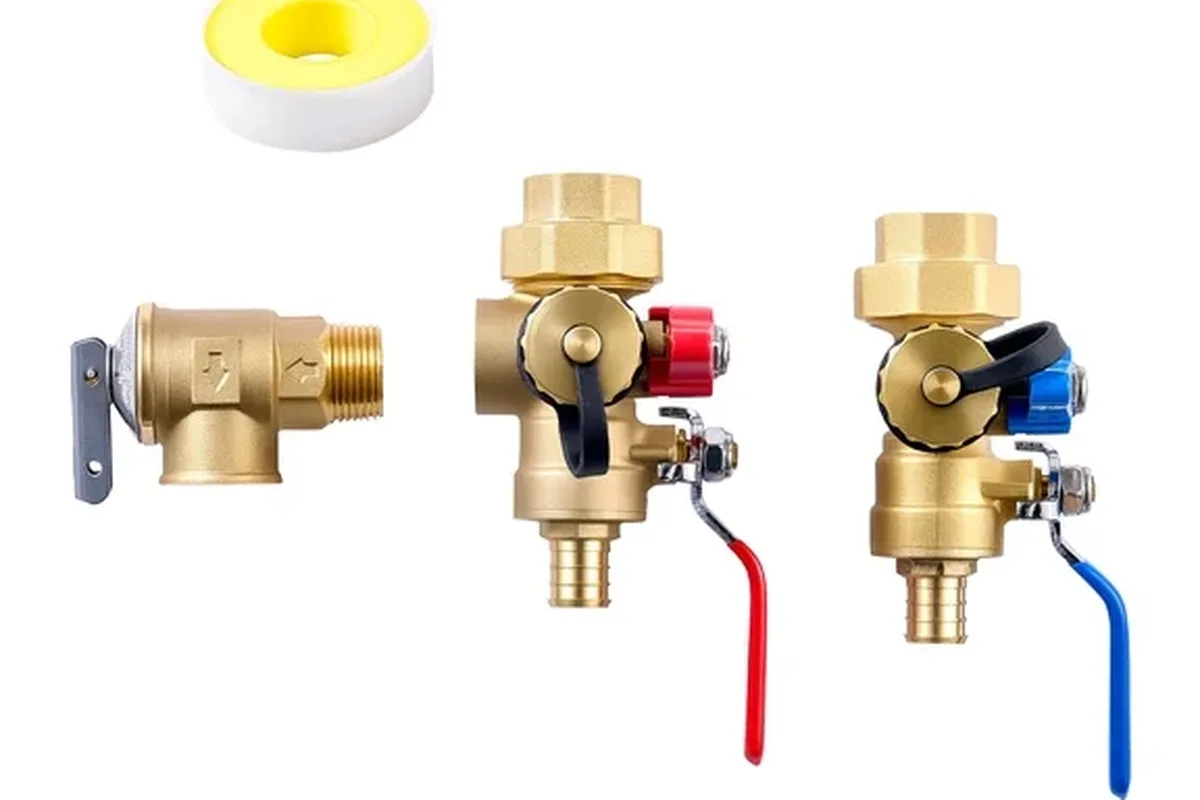
When we replace a drain valve, we do not install another plastic one. The upgrade that has proven itself over thousands of Diamond Bar service calls is the full-port brass ball valve: a solid brass body with a quarter-turn lever handle and a straight-through bore that is dramatically wider than the cramped passage in a plastic valve. The advantages stack up quickly. Brass does not crack from thermal cycling the way plastic does. The ball-and-seat design seals positively with a ninety-degree turn — no washers to harden, no multi-turn stems to seize. And the full-port bore drains the tank in a fraction of the time, which turns flushing from a dreaded chore into a quick task you might actually do on schedule.
The difference shows up most clearly during the flush itself. A clogged plastic valve trickles; a full-port brass valve roars. That flow velocity matters because sediment does not politely walk out of a tank — it needs water moving fast enough to carry the grit with it. Faster draining means more complete sediment removal, which means less insulating scale on the tank bottom, quieter operation, and better efficiency. The lever handle is a practical upgrade too: you can see at a glance whether the valve is open or closed, and in an emergency you can shut it with one motion instead of spinning a stiff plastic wheel while water pours out.
Cost-wise, the brass upgrade adds only a modest amount to the service compared with a like-for-like plastic replacement, and it pays that back the first time you flush without a fight — or the first time it simply does not drip. We consider the brass ball valve the correct repair rather than an upsell: installing another plastic valve that will fail the same way in a few years does not serve the homeowner. Every drain valve replacement we perform in Diamond Bar gets the brass upgrade as standard, because we would rather fix it once than revisit it.
Our Drain Valve Replacement and Flush Service
Our drain valve replacement visit is really two services in one, because the tank must be drained to swap the valve — and a drained tank is the perfect opportunity for a proper sediment flush. We start by shutting off the energy supply and the cold-water inlet, then attach a hose to the old valve and drain the tank in a controlled manner to a safe discharge point. With the water level below the valve port, we remove the old valve. Like anode rod hex heads, old drain valves can be stubborn, and we take care to break them free without twisting the tank fitting — if a valve is corroded to the point where the fitting itself is at risk, we will tell you before applying more force, because an honest assessment beats a broken tank.
The new full-port brass ball valve threads in with proper sealant, oriented so the lever operates freely and a hose can attach without strain. Then comes the flush: with the new valve wide open, we pulse cold water through the tank in bursts, stirring up the sediment bed and carrying it out until the discharge runs clear. In Diamond Bar tanks that have gone years without flushing, this step can be dramatic — buckets of sand-like grit that explain the rumbling noises and the shrinking hot-water supply. We keep flushing until the water runs clean, which restores the tank's heat-transfer efficiency and quiets operation noticeably.
Finally, we close the new valve — feeling that solid quarter-turn seat — refill the tank completely, purge air from the hot lines, restore power or gas, and verify the burner or elements cycle correctly. Before leaving, we check every other common leak point on the heater: the TPR valve, inlet and outlet connections, and the tank base. You get a heater that no longer drips, drains properly, heats more efficiently, and has been fully inspected — all in a single visit. To schedule, call (833) 713-2101.