Professional Service
Water that scalds without warning, showers that turn lukewarm halfway through, a heater that seems to have a mind of its own — these are the classic signatures of a failing thermostat. On electric water heaters, upper and lower thermostats choreograph the heating elements to keep your tank at a steady, safe temperature; when one sticks, drifts, or dies, comfort and safety both suffer. A thermostat stuck closed can overheat the tank dangerously, while one stuck open leaves you with cold surprises. Thermostat replacement in Diamond Bar, CA 91765 is a quick, affordable repair that restores precise temperature control — but only when the diagnosis is right, because thermostats and heating elements fail with nearly identical symptoms. Our team tests both before replacing either, so you pay for the part you actually need. We service all major electric models across Diamond Bar, and most repairs finish in under an hour. Call (833) 713-2101 for accurate diagnosis and same-day thermostat service.
What Water Heater Thermostats Do
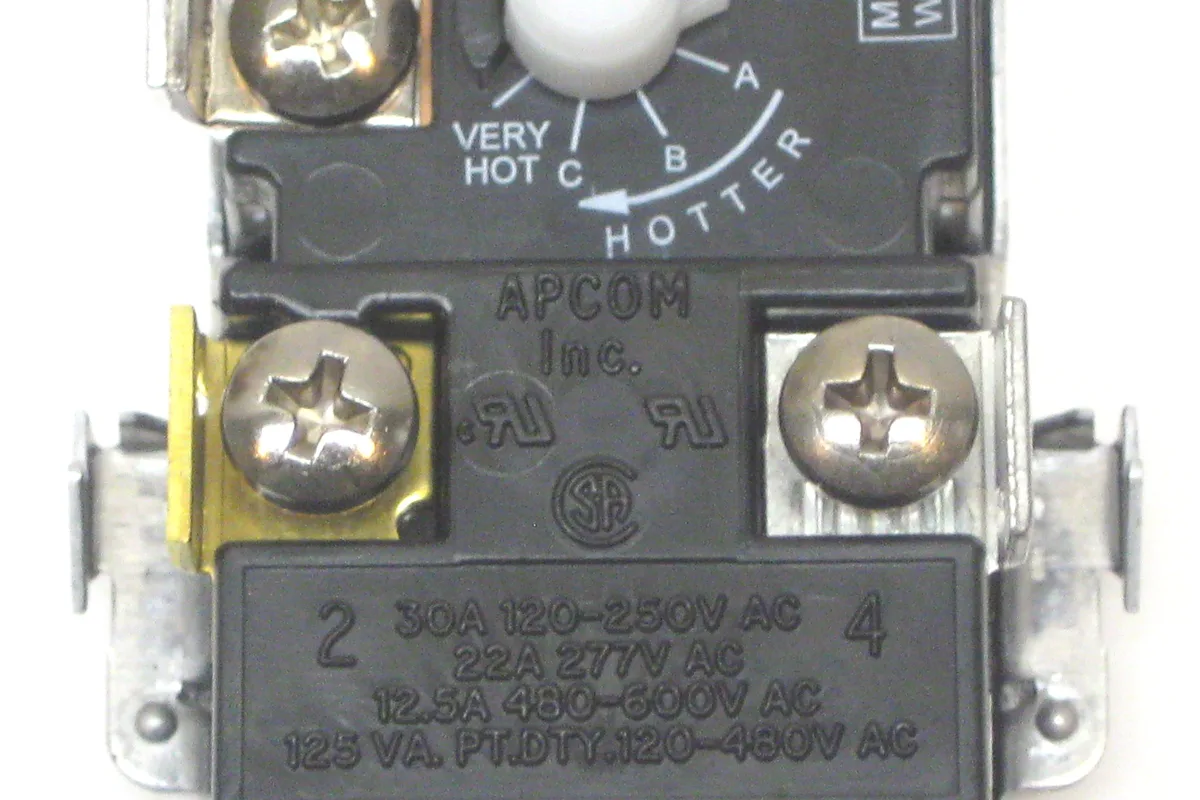
An electric tank water heater does not heat its water all at once — it heats in a carefully sequenced relay between two thermostats and two elements. The upper thermostat is the lead: it senses the temperature at the top of the tank and powers the upper element until the top water reaches the set point, then hands off to the lower thermostat, which drives the lower element to heat the bulk of the tank. Only one element ever runs at a time, and the thermostats decide which one and for how long. When hot water is drawn and cold water enters the bottom, the lower thermostat calls for heat; when the top cools, the upper takes priority again. This choreography is what gives you consistent temperature from the first shower to the last dish.
Each thermostat also carries a safety device: the high-limit switch, the little reset button homeowners sometimes discover. If tank temperature climbs past safe limits — around 170 to 180 degrees — the high-limit trips and cuts power to everything, requiring a manual reset. It is a last-resort guardian against runaway heating, and when it trips repeatedly, it is reporting that something upstream is wrong: a thermostat stuck closed, an element shorted, or wiring damage. The thermostats themselves are simple bimetallic devices, but years of heat cycling fatigue their calibration — they start calling for heat late, cutting out early, or sticking in one position.
On gas heaters, the equivalent function lives inside the gas control valve, which combines thermostat, pilot control, and safety shutoff in one assembly — a different part with different failure modes, covered in our gas control valve replacement service. The principles, though, are the same: accurate temperature sensing, crisp switching, and a safety backstop. Whether electric or gas, temperature control is the system that stands between your family and scalding water, which is why thermostat problems deserve prompt, professional attention rather than a wait-and-see approach. A five-degree drift at the tap is a comfort issue; a thermostat stuck closed is a safety issue, and the two can look identical until tested.
Symptoms of a Bad Thermostat
Thermostat failures speak through your water temperature, and learning the dialect helps you describe the problem accurately when you call. Scalding water — far hotter than the dial setting — is the most urgent symptom: it suggests the thermostat is stuck closed, continuously powering its element with no shutoff. This is a safety hazard, especially for children and elderly household members, and it warrants prompt service. At the other extreme, persistently lukewarm water that never reaches the set temperature points to a thermostat stuck open or calling for heat at the wrong threshold — the element is fine, but it is never being told to work, or not for long enough.
Symptoms of a failing thermostat
- Water scalds despite a moderate thermostat setting
- Water stays lukewarm no matter how high the dial goes
- Hot water runs out much faster than it used to
- The high-limit reset button trips repeatedly
- Temperature swings wildly between too hot and too cold
- One element seems to do all the work while the other never engages
Rapid hot-water depletion is the subtlest signature: the upper thermostat and element work, so the first minutes of the shower feel normal, but the lower thermostat never engages its element and the tank's reserves collapse. Temperature swings — scalding one minute, lukewarm the next — suggest a thermostat with erratic calibration, cutting in and out at random thresholds. And the tripping reset button is the heater's own distress signal: the high-limit only trips when something has already gone wrong thermally. If you find yourself resetting it more than once, stop resetting and call — the button is doing its job, and the underlying fault needs a professional. When Diamond Bar homeowners describe these symptoms alongside a leak or dampness around the heater, we inspect the full system on the same visit, since overheating from a stuck thermostat can stress tank fittings and accelerate the seeps that bring us out for water heater leak repair.
Thermostat vs. Element: Getting the Diagnosis Right
Here is the trap in electric water heater repair: a dead upper thermostat and a dead upper element produce exactly the same symptom — no hot water. A weak lower thermostat and a weak lower element both produce the same symptom — hot water that runs out fast. Replace the wrong one and you have spent money, waited for parts, and still have cold showers. This is why our service always tests before it replaces. With power verified off, we check each element's resistance and insulation, then test each thermostat's switching behavior: does it call for heat below the set point, cut out crisply at it, and hand off correctly between upper and lower? A thermostat that never closes, never opens, or switches at the wrong temperature has identified itself.
Wiring inspection is part of the same diagnostic pass, because thermostats do not fail in isolation — a failing element often scorches its thermostat's terminals on the way out, and heat-damaged wiring can mimic thermostat failure. We look for discoloration, brittleness, and loose connections at every terminal, and we check the high-limit switch's history: a tripped high-limit tells us the tank overheated, which points back at the thermostat that allowed it. Sediment gets assessed too, since a lower element buried in mineral grit overheats no matter how perfect its thermostat is — in Diamond Bar's hard water, that is a common co-conspirator.
The payoff of this discipline is a repair that fixes the actual fault the first time. Too many homeowners have paid for an element replacement that did not help, then paid again for the thermostat that was the problem all along — or vice versa. Our testing takes minutes and eliminates the guessing entirely. You will see the meter readings, understand which component failed and why, and approve the specific repair before we make it. That transparency is the difference between a parts-swapper and a diagnostician, and it is the standard we bring to every thermostat call in Diamond Bar.
Our Thermostat Replacement Service
Once testing has convicted the thermostat, replacement is refreshingly straightforward — which is exactly why the diagnosis matters so much more than the procedure. We switch off the heater's dedicated breaker and verify zero voltage at the thermostat terminals with a meter, because the only acceptable assumption around 240 volts is that it is live until proven otherwise. The access panels and insulation come off to expose the thermostats seated against the tank wall. Wires are disconnected and mapped — upper and lower thermostats wire into the element sequence differently, and correct reconnection is essential — then the failed thermostat unclips from its bracket and the new one seats firmly against the tank, since it can only sense temperature accurately through solid thermal contact.
The replacement must match the original's specification: correct voltage, correct temperature range, and the high-limit safety rating for the model. We set the new thermostat to a safe 120 degrees unless you request otherwise, reconnect every wire to its mapped terminal, and verify the seating and insulation before the panels go back on. Then comes the step that separates a proper job from a quick one: verification under power. We restore the breaker and observe a full heating cycle, confirming the thermostat calls for heat at the right point, cuts out crisply at the set temperature, and sequences correctly with its partner thermostat and both elements. Delivered water temperature gets checked at the tap against the setting.
While the panels are off, the heater gets the same careful eye we bring to every visit: element ports checked for seepage, wiring inspected for heat damage, tank base checked for dampness. Thermostat failure and the overheating it causes can stress fittings and gaskets elsewhere on the heater, so a quick full-system check is cheap protection. Most thermostat replacements in Diamond Bar are done within the hour, and the result is immediate: steady, safe, predictable hot water. To schedule your diagnosis and repair, call (833) 713-2101.