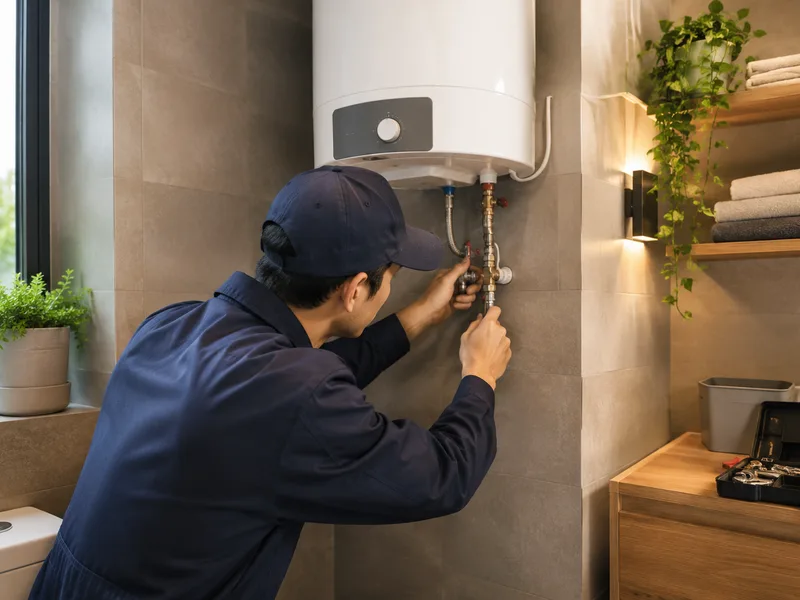
Professional Service
Most water heater leaks are not freak accidents — they are the predictable end of years of corrosion, pressure stress, and neglected maintenance. That is actually good news, because predictable failures can be prevented. A water heater that receives basic care, lives under reasonable pressure, and gets replaced before its tank gives out will very likely never flood your home. This is the complete prevention plan: the maintenance that matters, the upgrades that protect, and the replacement timing that avoids the 2 a.m. disaster.
Prevention Layer 1: Maintenance That Stops Corrosion
Corrosion is the number-one cause of tank leaks, and it is largely controllable. Flush the tank annually to remove the sediment that insulates the bottom, forces overheating, and accelerates steel fatigue. Inspect and replace the anode rod every three to five years — this is the single highest-leverage action in water heater ownership, because an active anode rod is the only thing standing between your water and the bare steel of the tank. Keep the thermostat at 120°F: cooler water precipitates minerals more slowly and stresses the tank less. Test the relief valve yearly so you know it will protect the tank if pressure ever spikes. None of this is difficult or expensive, and together it addresses the root cause of most tank failures.
Prevention Layer 2: Control the Pressure
Excessive pressure is the number-two killer, and it is invisible until something gives. Keep your home's water pressure in the 50–60 psi range — install a pressure-reducing valve if the municipal supply runs higher, as it does in parts of the Diamond Bar area. If your plumbing is a closed system (you have a PRV, check valve, or backflow preventer), install an expansion tank on the water heater's cold line and keep its air charge matched to system pressure. Pressure that spikes with every heating cycle flexes the tank, hammers joints, and eventually finds the weakest point. A ten-dollar pressure gauge on a hose bib tells you where you stand; ignorance is the only thing standing between most homeowners and this fix.
Prevention Layer 3: Catch Drips Before They Become Floods
Even well-maintained heaters can develop fitting leaks, valve weeps, or supply-line failures. Early detection turns these into ten-minute fixes instead of insurance claims. Do a monthly 60-second visual check: floor around the base, top fittings, relief valve pipe, supply lines. Install a battery-powered leak alarm on the floor beside the tank — when water touches it, it screams. For stronger protection, install an automatic shutoff valve with water sensors: when the sensor detects water, the valve closes the supply automatically, even at 2 a.m. while you are asleep or away on vacation. Smart leak detectors that alert your phone add remote awareness. These devices are cheap, reliable, and absurdly cost-effective compared to a single water damage event.
Prevention Layer 4: Upgrade the Weak Points
Several inexpensive upgrades eliminate common failure points. Replace the cheap factory plastic drain valve with a full-port brass valve — plastic valves get brittle and snap, brass ones last. Replace aging flexible supply lines with quality braided stainless connectors, and replace them proactively every 8–10 years rather than waiting for one to burst. Install a drain pan under the tank with a drain line to a safe location, so small leaks are contained and directed instead of spreading. Verify the earthquake straps are anchored into studs — in California, seismic movement is a real leak cause, and proper strapping prevents the tank from shifting and stressing connections. And keep the area around the heater clear so you can actually see problems developing.
Prevention Layer 5: Replace on Your Schedule, Not the Tank's
The ultimate leak prevention is retiring the heater before the tank fails. No amount of maintenance makes a 15-year-old gas tank young again — at some point the steel is simply worn out, and the question is not whether it will leak but when. Start planning replacement as the unit approaches the top of its expected range (8–12 years for gas, 10–15 for electric). Watch for the end-of-life signals: rusty hot water that does not clear, exterior rust streaks, rumbling that persists after flushing, and any dampness at the base. A planned replacement costs less than an emergency one, lets you shop quotes, and — most importantly — happens before the flood, not after.
- Yearly: flush sediment, test relief valve, confirm 120°F setting.
- Every 3–5 years: inspect/replace anode rod; check expansion tank charge.
- Monthly: 60-second visual check for dampness, drips, and rust.
- Once: leak alarm, drain pan, brass drain valve, quality supply lines, PRV if pressure is high.
- At end of life: replace proactively — 8–12 years gas, 10–15 electric.
Leak Detection Devices: Cheap Insurance for Diamond Bar Homes
The single highest-value leak prevention purchase is a water leak detector — a small battery-powered puck that sits on the floor by the water heater and screams (or sends a phone alert) the moment it touches water. Basic models cost less than a pizza; Wi-Fi models that text you run a bit more. Place one at the base of the tank and, if your heater sits on a platform or in a pan, one inside the pan. For Diamond Bar's garage installations, where a slow leak can run unnoticed behind storage for weeks, a detector turns a silent leak into an immediate alert.
The step up is an automatic shutoff valve: a motorized valve on the water heater's cold inlet, paired with leak sensors. When a sensor detects water, the valve closes itself — no human required. This is the right call for homes where the heater sits above finished space, for vacation homes, and for anyone who travels. Whole-house versions exist too, but a point-of-use valve on the heater covers the highest-risk appliance at a fraction of the cost. In a city where many residents commute long hours to jobs across the LA basin, protection that works while nobody is home earns its keep.
Drain Pans Done Right
California code requires a drain pan under water heaters where leakage could cause damage — which covers most installations — but a pan is only as good as its drain. A pan with no drain line just becomes a shallow bathtub that overflows once full. The pan needs a drain line routed to an approved location: a floor drain, the exterior, or another spot where water can go without harming the structure. During your next look at the heater, check two things: is there a pan, and does it actually drain somewhere?
Many Diamond Bar garage heaters sit directly on the concrete with no pan at all — common in older installs that predate the requirement. Adding a pan during the next replacement is straightforward and inexpensive; retrofitting one under an existing tank requires lifting the tank, so it is usually bundled with other work. If your heater is in an interior closet or above living space, a drained pan is not optional in any practical sense — it is the difference between a contained drip and a ceiling collapse.
Pressure Control: The Invisible Leak Preventer
High water pressure does not cause dramatic failures; it causes slow ones. Chronic pressure above 80 PSI fatigues the tank, weeps past the TPR valve, and stresses every flex connector and supply line in the house. Parts of Diamond Bar run high street pressure, and homes without a pressure-reducing valve absorb all of it. A $10 pressure gauge threaded onto the water heater's drain valve (or any hose bib) gives you the number in thirty seconds. If it reads above 80 PSI static, a PRV is overdue.
Where a PRV is installed, an expansion tank must go with it — the PRV creates the closed system that makes thermal expansion a problem, as discussed in our expansion tank guide. The pair together — PRV holding pressure at 50–70 PSI, expansion tank absorbing heating spikes — removes the single biggest invisible stress on the tank. It is the least glamorous leak prevention there is, and one of the most effective.
A Leak-Prevention Calendar for Diamond Bar Homeowners
Prevention works best as a schedule, not a vague intention:
- Monthly (30 seconds): glance at the floor around the heater when you are in the garage anyway. Look for dampness, rust streaks, or white mineral deposits at pipe joints.
- Twice a year: flush sediment, test the TPR valve, and check the leak detector batteries. Spring and fall line up well with Diamond Bar's mild seasons.
- Every 2–3 years: inspect the anode rod (year three for the first check), look over flex connectors and the gas line for corrosion, and verify the seismic straps are tight.
- Year 8–10: start planning replacement on your terms. A tank replaced at year eleven on a Saturday morning costs far less — in money and disruption — than a tank that ruptures at year thirteen on a Sunday night.
None of these steps is difficult or expensive. Together they address every common leak path: corrosion (anode, flushing), pressure (PRV, expansion tank), containment (pan, detectors), and seismic movement (straps). A water heater that gets this calendar rarely surprises its owner.
Want a professional to handle the prevention for you? Water Heater Leak Repair Masters offers thorough tune-ups and leak-prevention upgrades across Diamond Bar, CA — flushing, anode rods, alarms, pans, and honest replacement timing advice. Call (833) 713-2101.