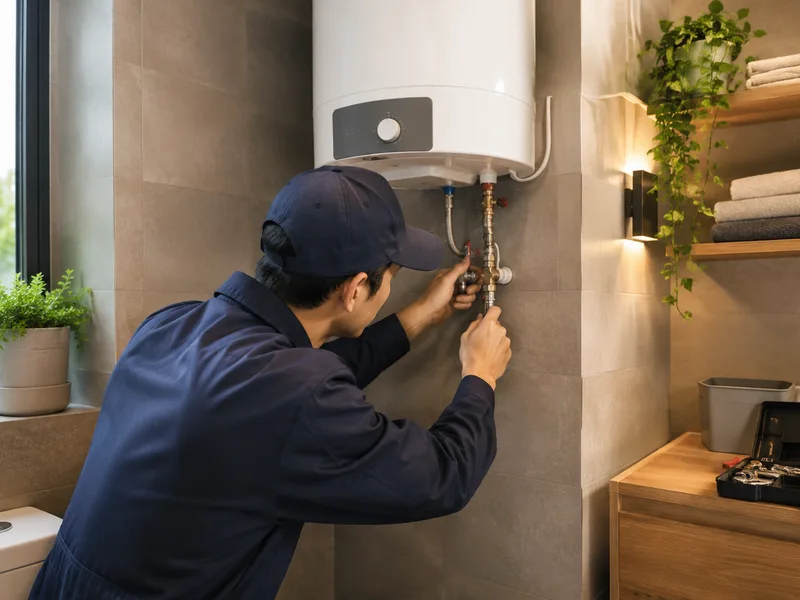
Professional Service
"Flush your water heater annually" is the standard advice — and it is good advice, but it is not the whole story. The right flushing frequency depends on your water hardness, how much hot water your household uses, and the age and condition of your tank. Flush too rarely and sediment bakes into efficiency-robbing scale; flush a fragile old tank aggressively and you can cause the very leak you were trying to prevent. Here is how to set the right schedule for your Diamond Bar home.
Why Sediment Is the Enemy
A quick refresher on what you are fighting: dissolved calcium and magnesium precipitate out of heated water and settle on the tank bottom as sediment. Left alone, heating cycles bake it into a hard, insulating crust. That crust forces longer burner or element cycles (higher bills), overheats the tank bottom (stressed steel, shorter life), displaces water volume (less hot water), and produces the popping and rumbling sounds of water boiling beneath the layer. Sediment also harbors corrosive conditions against the tank bottom and can clog the drain valve itself. Flushing removes the loose sediment before it becomes permanent scale — it is preventive, not restorative, which is why frequency matters more than intensity.
The Standard Answer: Once a Year
For most households on moderately hard municipal water — which describes much of Diamond Bar — an annual full flush is the right baseline. Once a year is frequent enough to remove sediment before it hardens, infrequent enough to be a manageable chore, and it aligns naturally with the rest of your yearly heater checkup: relief valve test, anode rod inspection schedule, and connection check. Put it on the calendar — spring is a fine time — and it becomes routine rather than a rescue operation. Households that flush annually consistently get more years from their tanks than identical households that never flush; this is one of the best-documented maintenance effects in plumbing.
When to Flush More Often: Every 6 Months
Step up to twice a year if any of these apply: your water tests as hard or very hard (above 7 gpg); you are on well water with high mineral content; your household uses a lot of hot water (large family, frequent laundry); your heater runs at high temperatures (above 130°F precipitates minerals much faster); or you have a tankless unit, which needs descaling every 12–24 months as a separate but related discipline. The test is simple: when you flush, look at what comes out. If the water runs brown and gritty for a long time, six months was not too soon. If it runs nearly clear after a few gallons, you can relax back to annual.
When Annual Flushing Is Not Enough — or Too Much
Two edge cases deserve mention. First, the never-flushed old tank: if your heater is 10+ years old and has never been flushed, an aggressive first flush can dislodge sediment that was effectively plugging small corrosion pits — revealing leaks. Have the tank's condition assessed before a first flush on a very old unit; sometimes the right move is planning replacement rather than disturbing a fragile tank. Second, softened water: softeners reduce scale formation, so annual flushing is still wise (softened water does not eliminate all sediment) but the urgency drops — while anode rod inspections should increase, since softened water consumes rods faster. Match the schedule to the water, not to a rigid rule.
Signs You Are Overdue for a Flush
- Popping, crackling, or rumbling during heating — sediment boiling under its crust.
- Hot water runs out faster than it used to — sediment displacing water volume.
- Rising energy bills with no other explanation — the heater working harder through insulation.
- Discolored water when you first open hot taps — sediment stirring up.
- It has been more than a year — the calendar is the most reliable indicator.
If you are hearing rumbling, do not wait for the anniversary — flush now, and have the tank assessed, because long-standing sediment may have already done damage.
Making Flushing Painless
The reason most people do not flush is not difficulty — it is friction. Reduce it: upgrade the cheap plastic drain valve to a full-port brass ball valve during your next flush (it drains dramatically faster and will not clog on sediment chunks). Keep a dedicated garden hose coiled near the heater so you are not hunting for one. Flush in the morning before hot water gets used, so there is no scalding risk and no waiting for cool-down. And combine it with the relief valve test and visual inspection so one session covers the whole annual checkup. An hour once a year is the cheapest life insurance your water heater can get.
Overdue for a flush in Diamond Bar — or dealing with a stubborn valve or heavy sediment? Water Heater Leak Repair Masters performs professional flushes, including tough cases, plus a full condition check. Call (833) 713-2101.