Professional Service
The thermostat is your water heater's brain — the component that decides when to heat and when to stop. When it malfunctions, the symptoms are unmistakable: no hot water at all, water that is scalding hot, or hot water that runs out far too fast. Before you assume the whole heater is dead, it is worth understanding how thermostats fail, how to test them, and when replacement is a simple fix versus a sign of bigger trouble. This guide covers both gas and electric units.
How Water Heater Thermostats Work
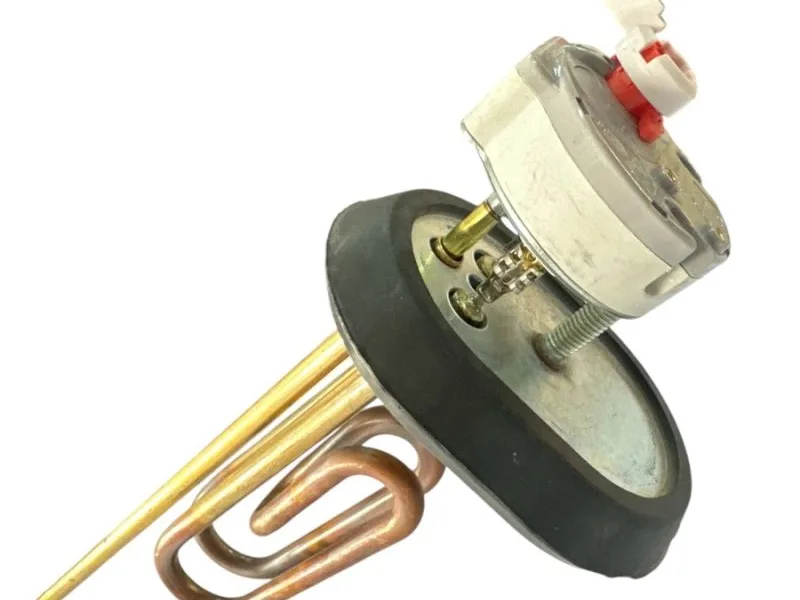
On a gas heater, a single thermostat — part of the gas control valve assembly — senses tank temperature and opens the gas valve to fire the burner when water cools below the setpoint, closing it when the target is reached. On an electric heater, there are two thermostats (upper and lower) working with two heating elements in sequence: the upper thermostat heats the top of the tank first, then hands off to the lower. Understanding this matters for diagnosis, because electric thermostat problems have a distinctive signature — plenty of hot water that runs out quickly usually means the lower thermostat or element has failed while the upper still works, leaving only the top third of the tank hot.
Symptom 1: No Hot Water at All
On an electric heater, total hot water loss often traces to the upper thermostat or the high-limit reset button. Before anything else, check the reset button — usually a red button behind the upper access panel. If it has tripped, press it; if it trips again soon after, something is wrong (often a failing thermostat or a grounded element) and resetting repeatedly will not fix it. Test with a multimeter: with power safely off and locked out, check the thermostats for continuity and proper switching. A thermostat that shows no continuity when it should, or that never switches, is bad. On a gas heater, no hot water with a lit pilot points to the gas control valve/thermostat assembly — if the pilot is out, relight it first, since that is the more common cause.
Symptom 2: Water Too Hot or Scalding
Water far hotter than the thermostat setting means the thermostat is not telling the heater to stop — a dangerous failure mode. On electric units, a stuck-closed thermostat keeps its element heating indefinitely; the high-limit switch should trip as a backup, and if it does not, the relief valve becomes the last defense. On gas units, a failed gas control thermostat can keep the burner firing. Treat overheating as urgent: turn the energy off, let the water cool, and do not keep resetting and hoping. Check the thermostat setting first — someone may have cranked it to maximum — but if the setting is normal and the water is scalding, the thermostat has failed and needs replacement. Never ignore this symptom; it is the failure mode the relief valve exists to backstop.
Symptom 3: Hot Water Runs Out Too Fast
On electric heaters, this is the classic lower-thermostat failure: the upper portion heats normally, giving you a short burst of hot water, but the lower element never fires so the bulk of the tank stays cold. It can also be a failed lower element rather than the thermostat — testing distinguishes them. On gas heaters, rapid depletion with a working burner suggests a broken dip tube (cold water mixing at the top) or heavy sediment displacing capacity, rather than the thermostat. Do not replace thermostats until you have confirmed they are the problem; the dip tube and sediment are more common culprits for this symptom on gas units.
Testing and Replacing a Thermostat
For electric heaters, thermostat replacement is a manageable DIY job for anyone comfortable with electrical safety: turn off the breaker, verify power is dead with a non-contact tester, remove the access panels and insulation, disconnect the wires (photo first), unclip the old thermostat, and install the new one set to 120°F. Thermostats are inexpensive parts. Always replace with the correct model for your heater — upper and lower thermostats are not interchangeable on most units. For gas heaters, the thermostat is integrated into the gas control valve, making replacement a gas-line job that belongs to a professional. If you are not completely comfortable with 240V electrical work, hand the electric job to a pro too — there is no shame in it, and the service call is cheap compared to a shock injury.
- No hot water (electric): check high-limit reset, then test upper thermostat.
- Scalding water: shut down immediately — failed thermostat, urgent repair.
- Runs out fast (electric): suspect lower thermostat or lower element.
- Runs out fast (gas): suspect dip tube or sediment before the thermostat.
- Reset keeps tripping: stop resetting — diagnose the underlying fault.
Thermostat trouble in Diamond Bar? Water Heater Leak Repair Masters diagnoses and replaces thermostats, elements, and gas control valves on all major brands — usually same-day. Call (833) 713-2101.