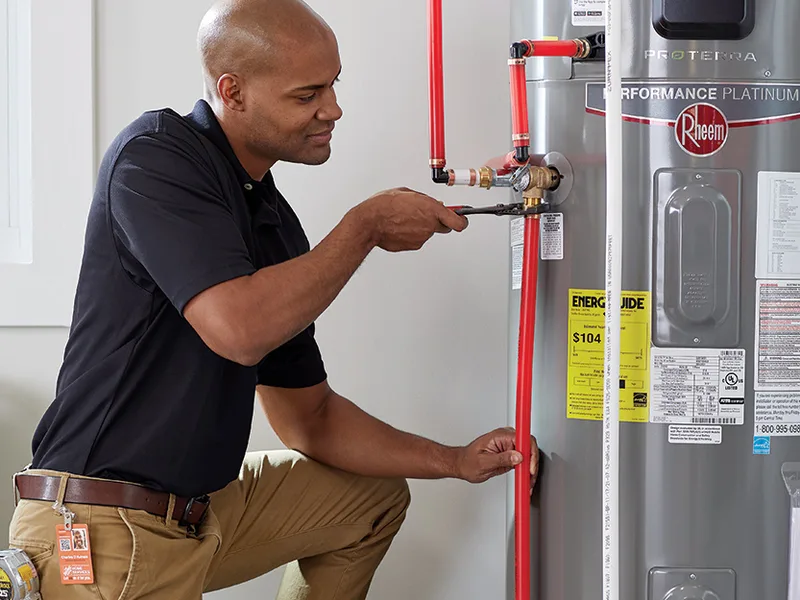
Professional Service
Shopping for a water heater, you will see 6-year, 9-year, and 12-year models sitting side by side, with the longer-warranty units costing noticeably more. It is natural to assume you are paying for a better-built heater. Sometimes you are. Sometimes you are mostly paying for the warranty itself. Understanding what water heater warranties actually cover — and the fine print that voids them — will save you from overpaying for years on paper that you may never collect.
What the Warranty Actually Covers
Here is the part most buyers miss: the "tank warranty" covers the tank against leaks due to manufacturer defects — essentially, if the tank itself fails within the warranty period, the manufacturer provides a replacement tank. It does not cover the labor to install that replacement, which is often the larger cost. It does not cover parts like thermostats, elements, or gas valves beyond their (usually shorter) parts warranty, typically one to six years depending on the component and brand. And it does not cover damage from freezing, flooding, or external causes. So a "12-year warranty" is really a promise about the steel vessel, not a bumper-to-bumper guarantee on the whole appliance. Read the warranty card — the exclusions section is the most informative part.
6-Year vs. 9-Year vs. 12-Year: What's Different?
In many product lines, the 6, 9, and 12-year models are physically very similar tanks. The longer-warranty versions often have a larger or higher-grade anode rod, slightly thicker insulation, and sometimes a better glass lining — real differences, but incremental, not transformative. Much of the price jump is the manufacturer pricing in the expected warranty claims. That does not make longer warranties a scam: the upgraded anode rod genuinely extends tank life, and the warranty has real value if the tank fails in year eight. But do not assume a 12-year tank is built twice as well as a 6-year tank. Compare the actual specs — anode rod size, insulation R-value, recovery rate — and decide whether the hardware upgrades justify the premium for your situation.
What Voids a Water Heater Warranty
Manufacturers deny claims more often than buyers expect, usually on these grounds:
- Improper installation. No expansion tank where code requires one, missing earthquake straps in seismic zones, improper venting, or unpermitted work — any of these can void coverage.
- Excessive water pressure. Most warranties require pressure below 80 psi. No pressure-reducing valve on a high-pressure supply? Claim denied.
- Never replacing the anode rod. Some warranties explicitly require periodic anode inspection; a tank that failed with its original long-dead rod is a gray area manufacturers exploit.
- Commercial use of a residential unit. Using a residential heater in a business voids the residential warranty instantly.
- Alterations and non-OEM parts. Modified controls, non-factory parts, or amateur gas valve swaps give the manufacturer an out.
- Missing proof of purchase and registration. Many warranties must be registered within 30–90 days, and claims need the original receipt and the rating-plate data.
Extended Warranties and Home Warranties
Retailers love selling extended warranties, and home warranty companies love covering water heaters — until one fails. Third-party extended warranties on water heaters are rarely good value: the failure modes they cover are narrow, claim processes are slow, and you are often assigned the cheapest available contractor. Home warranty plans do cover water heater replacement, but with caps, depreciation schedules, and fine print that frequently leaves you paying most of the bill anyway. The manufacturer's tank warranty plus a proper installation is the coverage that actually matters. Put the extended-warranty money toward a better anode rod maintenance schedule instead — it will do more for your tank's lifespan.
Don't Forget the Installer's Labor Warranty
The manufacturer's warranty covers the tank; a separate question is who covers the labor if something fails. Reputable installers warranty their workmanship — typically one to two years — covering leaks at connections, venting issues, and installation-related problems. This matters because most early failures are installation issues, not tank defects. When comparing quotes, ask each contractor what labor warranty they include and get it in writing. A strong labor warranty from an established local company is worth more than an extra three years of pro-rated tank coverage from a manufacturer you will never meet.
Getting the Most From Your Warranty
Protect your coverage with boring diligence. Register the warranty promptly and keep the receipt, model, and serial number somewhere you will find them in eight years. Install to code — expansion tank, straps, proper pressure — because the warranty assumes it. Keep water pressure in range with a PRV if needed. Inspect the anode rod on schedule and keep a dated record; if you ever file a claim, maintenance records are your best friend. And understand the pro-rated reality: many tank warranties are pro-rated after the first few years, meaning a failure in year ten of a twelve-year warranty gets you a discount on a new tank, not a free one. That is still real money — just calibrate expectations.
Buying a new water heater in Diamond Bar and want honest guidance on which warranty tier is worth it? Water Heater Leak Repair Masters installs all major brands and will walk you through the real differences — no upsell pressure. Call (833) 713-2101.