Diamond Bar Homeowner's Guide
You cannot see it, you cannot taste it, but the water flowing into Diamond Bar homes is working on your water heater every single day. Eastern Los Angeles County water runs moderately hard to hard, and that hardness is one of the leading reasons water heaters in Diamond Bar develop leaks earlier than their rated lifespans. Sediment settles, scale builds, anode rods dissolve faster, and efficiency quietly drops — until one day there is water on the garage floor. This guide explains what hard water does to your water heater, how to spot the damage early, and the exact maintenance routine that keeps a Diamond Bar heater running years longer.
Diamond Bar's Water: Why It Runs Hard
Diamond Bar sits at the eastern edge of the San Gabriel Valley, served primarily by the Walnut Valley Water District along with neighboring agencies in parts of the city. The supply blends imported water with local groundwater, and groundwater in this region carries a meaningful mineral load — calcium and magnesium dissolved from the surrounding hills and aquifers. That mineral content is what "hard water" means: water carrying dissolved minerals that fall out of solution when heated. Your water heater, which holds water at 120–140°F around the clock, is the perfect machine for pulling those minerals out. Every gallon heated leaves a little behind.
Hardness is measured in grains per gallon or milligrams per liter. Water above about 7 grains per gallon is considered hard, and much of the eastern San Gabriel Valley tests in the moderate-to-hard range, varying by season and supply blend. The exact number at your tap matters less than the direction: harder water means faster sediment accumulation, faster anode rod consumption, and a shorter comfortable life for any tank heater.
What Hard Water Does Inside Your Water Heater
Sediment Buildup on the Tank Floor
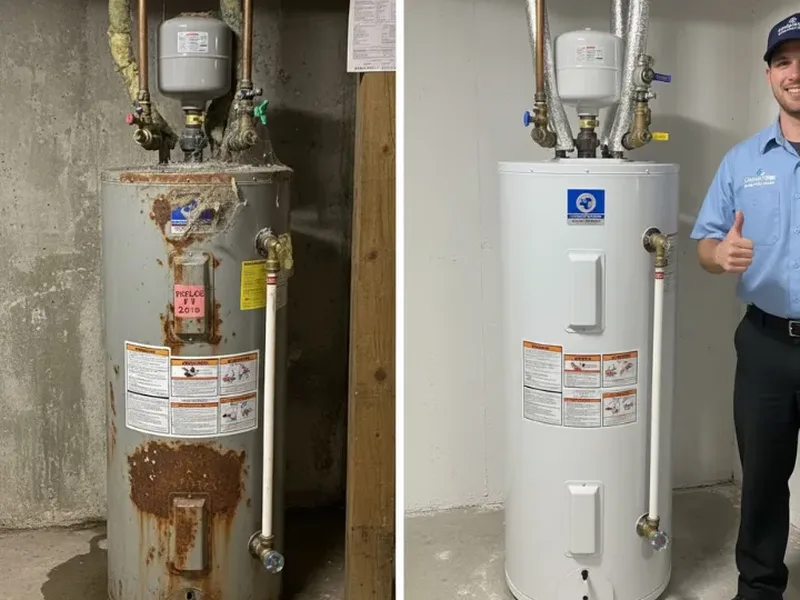
When hard water is heated, calcium carbonate precipitates and sinks. In a tank heater, that means a growing layer of sediment on the bottom of the tank, right where the burner or lower element does its work. Sediment is an insulator: the burner fires longer and hotter to push heat through the layer, the tank bottom overheats, and the steel fatigues. This overheating cycle is the single most common way hard water shortens a heater's life, and it is the reason flushing your water heater matters more in Diamond Bar than in soft-water cities.
Scale on Heating Elements
In electric heaters, scale coats the heating elements the way it coats a kettle — except the kettle gets replaced every few years and the element is expected to last a decade. Scaled elements run hotter to deliver the same heat, burn out sooner, and can develop pinhole leaks at their gaskets. If your electric heater is eating elements, hard water is the prime suspect. See heating element failure signs for what to watch for.
Faster Anode Rod Consumption
The anode rod is a magnesium or aluminum rod that corrodes so the steel tank does not have to. Hard, mineral-rich water is more conductive and more aggressive, so the rod gets consumed faster here than the national average. Once the rod is gone, corrosion turns on the tank itself — and a corroded tank is a leaking tank. In Diamond Bar, checking the anode rod every two to three years instead of the generic five is the smarter interval. Our anode rod replacement guide shows how to tell when yours is spent.
Clogged and Corroded Valves
Sediment does not stay politely on the tank floor. It migrates into the drain valve — which is why so many drain valves in hard-water areas seize or leak when someone finally tries to use them — and grit wears the seals in the temperature-and-pressure relief valve. A relief valve that weeps or a drain valve that will not close is often a hard-water story at its root. For the relief valve specifically, see what to do when your TPR valve leaks.
Lower Efficiency and Higher Bills
A half-inch of sediment can cut a heater's efficiency noticeably, forcing longer burn cycles for the same hot water. On gas heaters in Diamond Bar, that shows up as a climbing gas bill; on electric heaters, a climbing electric bill. Hard water does not just threaten the tank — it taxes you every month the sediment sits there.
Signs Hard Water Is Hurting Your Heater
You do not need a lab test to read the symptoms. Popping, rumbling, or crackling sounds from the tank mean sediment is boiling and shifting on the tank floor — the classic hard-water soundtrack. Hot water that runs out faster than it used to suggests sediment is displacing capacity or insulating the burner. White, crusty deposits around fittings, the drain valve, or the relief valve discharge pipe are mineral scale made visible. Rusty or discolored hot water can mean the anode rod is spent and corrosion has started — rusty water causes covers the full diagnostic. And a drain valve that drips or will not fully close often has sediment packed into it. If you recognize two or more of these, your heater is telling you the water is winning.
The Diamond Bar Maintenance Routine
None of this requires exotic equipment. It requires a schedule — and in a hard-water area, the schedule is tighter than the owner's manual assumes.
Flush the Tank Every 6–12 Months
Annual flushing is the minimum in Diamond Bar; every six months is better for older tanks or very hard supply. Connect a garden hose to the drain valve, run it to a safe drainage point, shut off the energy, and drain several gallons until the water runs clear. If the drain valve is plastic and has not been touched in years, consider having a technician do the first flush — a seized plastic valve can snap, and that turns maintenance into a repair. A full walkthrough is in our draining guide, and how often to flush for sediment covers the timing in detail.
Inspect the Anode Rod Every 2–3 Years
Pull the rod and look at it. If it is down to a thin wire, coated in calcium, or less than half an inch thick, replace it. A new rod costs a fraction of a new tank and resets the corrosion clock. In Diamond Bar's water, assume the shorter end of every replacement interval you read online.
Keep the Thermostat at 120°F
Higher temperatures precipitate minerals faster — every 10 degrees above 120 accelerates scale formation. Setting the thermostat to 120°F slows sediment buildup, cuts energy use, reduces scalding risk, and eases pressure on the relief valve. It is the single easiest dial you can turn.
Test the Relief Valve Yearly
Lift the test lever briefly and let it snap back; water should flow then stop cleanly. If it drips afterward or nothing flows at all, the valve needs attention. Do this test only when you know where the discharge pipe ends and have a bucket ready — and if the valve is old and crusty, have a replacement on hand before you touch it.
Exercise the Shutoff Valve
The cold-water inlet valve above your heater should turn freely. If it is frozen from years of mineral exposure, you will discover that at the worst possible moment — during a leak. Turn it a quarter-turn twice a year to keep it moving, and if it will not budge, have it replaced before you need it. Our emergency shutoff guide explains why this five-minute check matters.
Should You Get a Water Softener?
A whole-house water softener removes the calcium and magnesium before they reach the heater, and for Diamond Bar homes with very hard water it can meaningfully extend heater life — plus it ends scale on fixtures, spots on dishes, and stiff laundry. There are trade-offs to weigh: softeners add sodium to the water, need periodic salt and maintenance, and represent a real upfront cost. A middle path many homeowners choose is a softener for the whole house with a bypass or a separate drinking-water tap, or simply committing to the aggressive maintenance routine above instead. What you should not do is install a softener and then ignore the heater — softened water is less scale-forming but slightly more corrosive to anode rods, so rod checks still matter. If you are weighing the investment, compare it against the cost of replacing a tank two to four years early — the replacement cost guide has current Diamond Bar numbers.
When Hard Water Damage Needs a Professional
Maintenance handles prevention; some hard-water damage is already done and needs a technician. Call for help if the tank is popping loudly even after a flush (heavy baked-on sediment may need professional descaling or signals a failing tank), if the drain valve leaks or will not close, if the relief valve weeps continuously, if hot water is rusty, or if you see water anywhere it should not be — our leak signs guide helps you read what you are seeing. Water Heater Leak Repair Masters serves Diamond Bar and the surrounding San Gabriel Valley; call (833) 713-2101 for an inspection. You can also browse our water heater services, check our service areas, or contact us to schedule maintenance before hard water turns a small issue into a flooded garage.